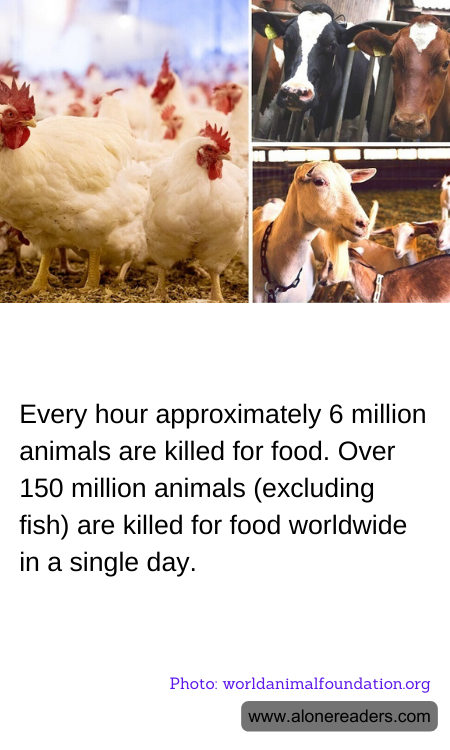
The scale of animal slaughter for human consumption is staggering, with around 6 million animals killed every hour, translating to over 150 million each day, excluding fish. These figures highlight a massive aspect of global food production that often goes unnoticed by many consumers. This mass slaughter is primarily driven by the demand for meat, dairy, and other animal products that are staples in diets around the world. The process not only raises serious ethical concerns but also has profound environmental impacts.
The ethical concerns about this massive scale of slaughter are centered around the treatment of animals before and during the slaughter process. Many animals live in cramped and harsh conditions in factory farms, where they often do not have sufficient space to move freely or access to the outdoors. The slaughtering methods, too, are often critiqued for their brutality and the immense stress they cause to animals. These practices prompt discussions on animal rights and welfare, urging for more humane treatment and consideration of animals as sentient beings who can experience pain and distress.
From an environmental perspective, the production of meat and other animal products has significant impacts, including deforestation, water depletion, and greenhouse gas emissions. Livestock farming is a major contributor to methane production, a potent greenhouse gas, while also being a significant user of agricultural land, much of which is used to grow feed rather than food for direct human consumption. The loss of biodiversity, pollution from livestock farming, and the high use of antibiotics, which increases antibiotic resistance, are additional factors that contribute to the urgency of rethinking our dietary choices and farming practices.
Many advocates for change push toward adopting more sustainable and ethical practices, such as increased regulation on animal welfare, transitioning to plant-based diets, or incorporating cultured meat into diets, which involves growing meat from cells in a lab without killing animals. These alternative approaches not only address ethical and environmental concerns but also could lead to innovations in how we approach feeding the growing global population.
Global awareness and individual consumer choices play crucial roles in shaping the industry. With an increasing number of people choosing vegetarian or vegan lifestyles and demanding more transparency and better treatment in animal farming, there is a growing movement towards more sustainable and ethical practices in food production. This shift not only aims to lessen the ethical burden but also to mitigate environmental impacts, pointing towards a future where the welfare of both the planet and its various inhabitants are given priority.
