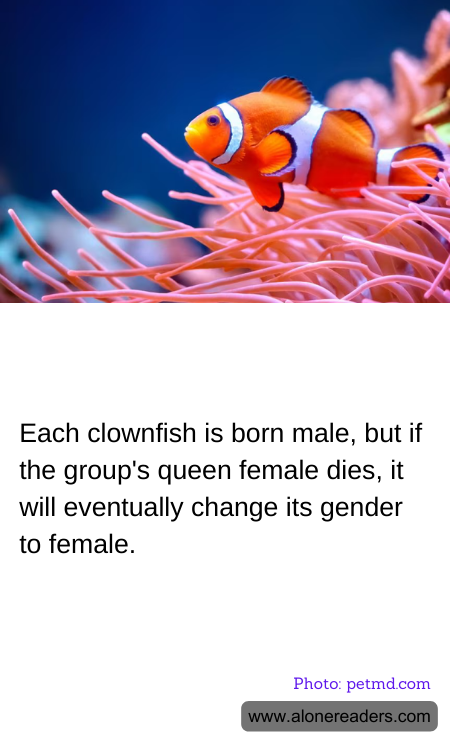
Clownfish, the brightly colored marine species famously depicted in the animated movie "Finding Nemo," exhibit a fascinating and complex approach to reproductive roles within their social structure. All clownfish are initially born male; however, they possess the unique ability to change their sex when environmental or social conditions necessitate. This adaptability is crucial for their survival and propagation.
The social structure of a clownfish group is established with a strict hierarchy, dominated by a single breeding pair. This pair consists of the dominant female, who is the largest fish in the group, and her mate, the second largest, who remains male. The rest of the group is made up of non-breeding males, which are usually smaller.
The mechanism behind this extraordinary sex transformation relates to the absence of the dominant female; should she die, the hierarchy within the group shifts. The largest male then undergoes a complete sex change, involving both behavioral changes and significant internal biological transformations spurred by hormonal adjustments. This process, known as sequential hermaphroditism, specifically protandrous hermaphroditism in the case of clownfish, ensures that the breeding pair is always present, thereby allowing for continuous reproduction and stable group dynamics.
This sex change is integral not only to maintaining social structure but also to ensuring genetic diversity within the population. By changing sexes and taking on the role of the dominant female, the new female can mate with another male, who may be from a different genetic background if he has migrated from another anemone. This ability to adapt and ensure survival through flexible reproductive roles highlights the resilient nature of clownfish and provides a fascinating glimpse into the complexities of marine life.
Moreover, the symbiotic relationship between clownfish and their host anemones showcases an intricate balance of marine ecosystems. Clownfishes protect the anemone from anemone-eating fish, and in return, the stinging tentacles of the anemone protect them from predators. This mutual relationship emphasizes the importance of clownfish in their natural habitat, stressing the need for marine conservation efforts to protect such intricate ecosystems from human-induced threats like climate change and habitat destruction.
The remarkable lifecycle and social structures of clownfish are not just curiosities; they provide essential insights into the adaptability and complexity of marine life, serving as a vivid reminder of nature’s ingenuity. As researchers continue to study these creatures, they uncover more about the means by which biodiversity is maintained in oceanic environments and the roles different species play in sustaining ecological balances.
