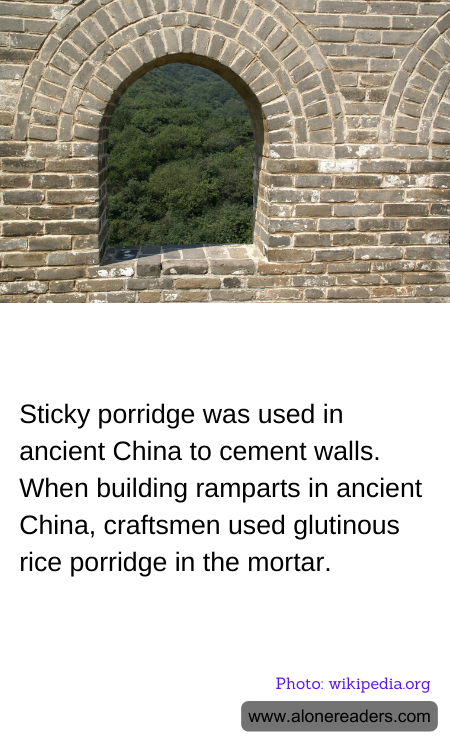
In ancient China, the technique of using sticky porridge made from glutinous rice to strengthen building materials exemplifies early innovation in construction practices. This substance, often referred to as "sticky rice mortar," was particularly noted for its use in the construction of walls and ramparts, where durability and strength were paramount. The porridge, when mixed with slaked lime and other components, created a mortar that was not only exceptionally strong but also resistant to water and weathering.
Historical records and modern scientific analysis both attest to the effectiveness of this ancient building material. For example, during the Ming Dynasty (1368–1644), this unique mortar played a crucial role in the construction of important structures such as city walls, pagodas, and tombs, some of which still stand today as a testament to their durability. The Great Wall of China, one of the world's most enduring monuments, also incorporates sections where sticky rice mortar was used, contributing to its longevity.
The secret behind the extraordinary properties of sticky rice mortar lies in its chemical composition. When glutinous rice, which is rich in amylopectin, is cooked down into a porridge and combined with calcium carbonate from the lime, a complex crystalline structure forms. This structure is highly effective at binding the mortar, making it more cohesive and significantly increasing its resistance to cracking and shrinkage. Moreover, studies have shown that this ancient formula is superior in many ways to modern mortar mixes, particularly in terms of its mechanical strength and its resistance to environmental degradation.
The use of sticky rice mortar is a wonderful example of traditional knowledge that has potential applications in contemporary construction, particularly in the restoration of ancient buildings and monuments. This blend of organic and inorganic materials underscores an early understanding of composite materials, predating modern engineering practices by centuries.
Preserving this ancient technique and studying its properties not only helps in maintaining heritage structures but also provides insights into sustainable building practices using locally available, less environmentally damaging materials. By looking back at such ancient technologies, modern scientists and engineers can learn valuable lessons about creating more sustainable and enduring building materials for the future.
