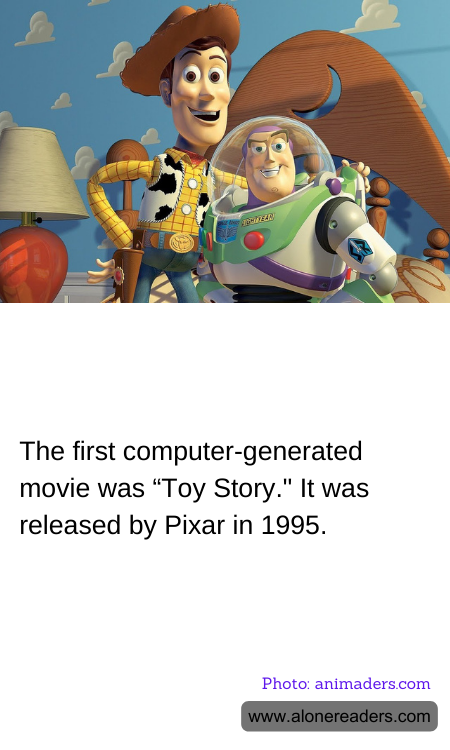
Released in 1995, "Toy Story" holds the distinguished title of being the first fully computer-generated full-length feature film. This groundbreaking movie was produced by Pixar Animation Studios and released by Walt Disney Pictures. Directed by John Lasseter, "Toy Story" heralded a new era in filmmaking, utilizing cutting-edge computer animation technology to create a visually captivating world.
The development of "Toy Story" was a pivotal moment in cinema history. Traditional animation techniques, which involved hand-drawing individual frames, had dominated for decades. The innovative use of computer technology in "Toy Story" allowed for more dynamic and fluid movement of characters and brought a novel level of three-dimensional depth to the screen that traditional animation could not achieve. Each character, including now-iconic figures like Woody and Buzz Lightyear, was meticulously crafted with distinctive animations that mirrored personality traits and emotions, setting a new standard for character development in animated films.
The plot of "Toy Story" revolves around a group of toys that come to life when humans aren't present. The story explores themes of jealousy, friendship, and acceptance, resonating with both children and adults. The engaging narrative, combined with its technological novelty, made "Toy Story" a massive box office success and it went on to spawn several sequels, each continuing the legacy of innovation and quality storytelling.
Beyond its entertainment value, "Toy Story's" success has had lasting impacts on the film industry. It demonstrated the potential of computer-generated imagery (CGI) in storytelling, paving the way for other studios to explore this technology. This has led to significant advancements in animation, seen in the increasingly sophisticated visual quality of films released in the years following.
Moreover, "Toy Story" established Pixar as a major player in the animation industry, renowned for its creativity and ingenuity. It set new aesthetic standards and pushed other filmmakers and studios to embrace CGI technology, leading many to innovate further to keep pace with Pixar’s achievements. This shift has contributed significantly to the vibrant, diverse landscape of modern animation, where computer-generated movies are now the norm rather than the exception.
