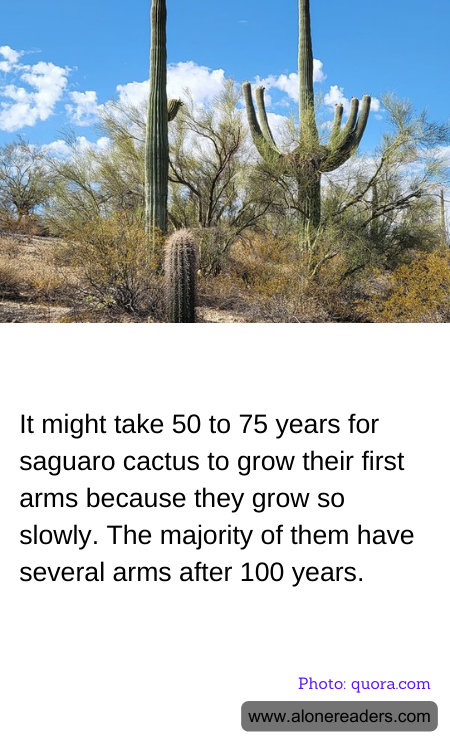
The saguaro cactus, a giant native to the Sonoran Desert of North America, is renowned for its iconic silhouette against the arid landscape. Saguaros are slow-growing plants, taking about 50 to 75 years to develop their first "arms." These arms are a classic feature of the cactus, curving upward and often giving the plant what looks like a human-like form.
The growth rate of saguaros is influenced by the surrounding climate and soil conditions. In more favorable conditions, a saguaro might grow slightly more quickly, whereas in less hospitable areas, their growth can be painstakingly slow. The first few decades of a saguaro's life are particularly vulnerable; they are sensitive to frost and extreme drought, which can significantly impede their growth or even be fatal.
As saguaros continue to grow, reaching upwards of 100 years old, they typically begin to sprout more arms. The number of arms a saguaro cactus might grow is variable. Some might grow many, while others remain armless throughout their lifetime. The presence of arms is thought to increase reproductive capacity, as each arm can potentially grow flowers and fruits. Each fruit can contain up to 2,000 small black seeds, thus playing a crucial role in the reproduction of the species.
Flowering usually begins around the age of 35 when a saguaro reaches about 6.5 feet tall. The flowers, which bloom in May and June, are primarily pollinated by nocturnal creatures, including bats. During this period, the white, creamy flowers only open at night and close by the next midday, relying on the cooler nighttime temperatures to preserve their delicate structures.
The saguaro cactus not only provides a critical habitat for a variety of desert wildlife, such as birds, who nest in the holes pecked by woodpeckers, but it is also culturally significant to the Indigenous peoples of the region. It has served as both a food and a construction material.
Despite their lifespan, which can exceed 150 years, saguaros are not immune to threats. Urban expansion, climate change, and the increased frequency of prolonged droughts pose significant risks to saguaro populations. Efforts to preserve these monumental plants are crucial to maintaining the biodiversity and ecological balance of their native desert landscapes. Their impressive longevity and the slow, deliberate pace at which they grow serve as a reminder of the resilience and adaptability of nature.
