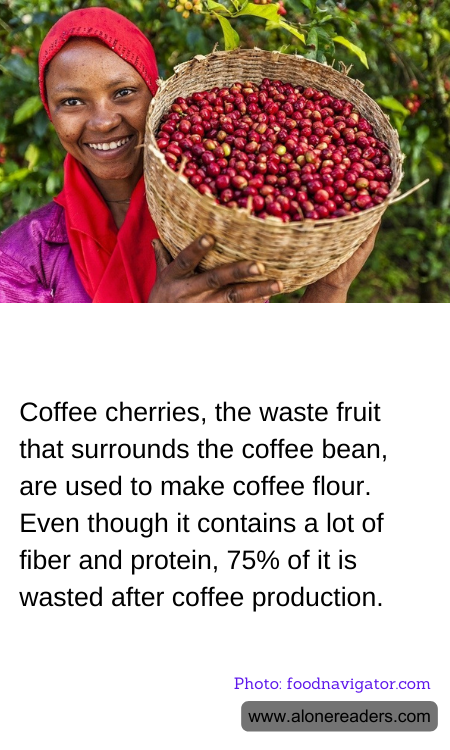
Coffee cherries, often discarded as a byproduct of coffee production, are gaining recognition for their potential beyond the beloved coffee beans they encase. Typically, after the coffee beans are extracted, the remaining fruit, known as coffee cherries, is left to decompose or is discarded, constituting about 75% of the fruit's mass. This not only represents a significant waste of resources but also contributes to environmental issues due to the decay process, which releases methane, a potent greenhouse gas.
Recently, innovative uses for this "waste" product have started to surface, one of which is the production of coffee flour. Coffee flour is made by drying and milling the leftover pulp of coffee cherries into a fine powder. This flour is not only sustainable but also highly nutritious, packed with fiber, protein, and antioxidants. It offers a mild, slightly fruity flavor that can add a unique twist to baked goods, smoothies, and even savory dishes.
The nutritional profile of coffee flour is impressive; it is rich in dietary fiber, helping to promote gut health and digestion, and is a good source of plant-based protein. Furthermore, its high antioxidant content helps combat free radicals, potentially reducing the risk of various chronic diseases. Coffee flour also contains potassium, iron, and caffeine, though in much smaller amounts than roasted coffee beans.
Incorporating coffee cherry flour into the global market could significantly impact the coffee industry's sustainability practices by turning waste into a valuable commodity. This could not only improve the environmental footprint of coffee production but also boost the economic standing of coffee farmers, who could profit from an additional product.
Moreover, the use of coffee cherry flour could inspire a shift in how agricultural byproducts are viewed overall, turning waste into opportunity and fostering innovations in other areas of food production. This shift could be a critical step toward more sustainable agricultural practices worldwide, emphasizing the importance of full-utilization farming techniques and the reduction of food waste.
