More About This Card
The practice of left-hand driving, though often associated with modern-day Britain and its former colonies, has historical roots that extend back to ancient Rome. The Romans, among the greatest innovators in road construction and military strategy, played a crucial role in shaping early traffic norms. As formidable warriors, Roman soldiers needed to be ready to defend themselves or attack enemies at a moment's notice while traveling.
The commonly accepted reason behind the Romans' preference for left-hand travel on roads lies in their combat tactics. Most Roman soldiers wielded weapons with their right hands, as is natural for the majority of people. When traveling on horseback or by chariot, riding on the left side of the road would allow them to have their right arm closer to an approaching enemy. This strategic positioning was crucial for defense and for striking opponents effectively, providing a clear advantage during encounters on narrow roads or in other restrictive environments.
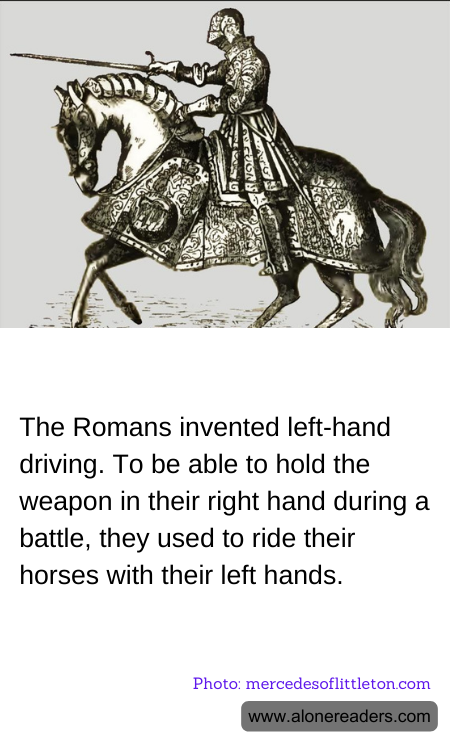
This method of riding not only facilitated combat but also influenced the general rules of road usage, contributing to a form of order and regulation in the expansive Roman roads network. The remnants of this practice were so ingrained that they persisted into the medieval period across many parts of Europe. Knights, for instance, found it advantageous to keep to the left for similar reasons, as it was easier to hold their lances (used in tournaments and battle) in the right hand.
While the transition from left-hand to right-hand travel in various countries over the centuries was influenced by numerous factors including cart design and territorial conquests, the initial Roman practice had a lasting impact on road travel norms. Today, while most of the world drives on the right side, countries like the United Kingdom, Australia, and Japan still adhere to left-hand driving, a testament to the deep-seated influence of historical practices on modern regulations. This ancient strategy, born out of practical military necessity, exemplifies how the exigencies of warfare can shape civil life, underscoring the interconnectedness of military practices and civilian infrastructure development.