More About This Card
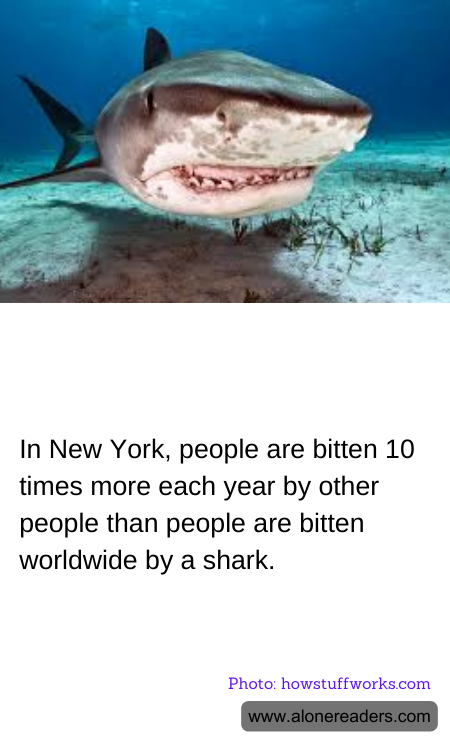
In the bustling streets of New York City, an unusual statistic surfaces that may seem more fitting for a bizarre trivia night than a public health concern: residents of the Big Apple are bitten by other humans at a rate 10 times more frequent than shark bites worldwide. This startling fact sheds light on the unique nature of urban environments and the stresses that can accompany life in such densely populated areas.
Human bites, unlike shark attacks, are rarely fatal but can lead to serious infections and other medical complications. Psychiatrists point to high stress, alcohol intoxication, fights, and domestic disputes as common triggers for these incidents. In contrast, shark attacks are exceptionally rare and often sensationalized by media, contributing to a disproportionate fear compared to their actual occurrence.
The comparison is striking and serves as a poignant reminder of the unpredictability of human behavior, especially in environments where personal space is limited and interactions are frequent. Social scientists suggest that the phenomenon could be linked to the psychological and social pressures of city living. High population density, competition for resources, and the constant presence of others can exacerbate tensions and lead to aggression.
This finding underscores the need for better conflict resolution strategies and public awareness campaigns that focus on managing stress and reducing interpersonal violence. Urban planners and city officials might also consider this data when designing public spaces to promote safer and more harmonious environments.
The next time the topic of dangerous animals arises, perhaps New Yorkers should consider the human animal as a more relevant danger in their everyday urban jungle. Recognizing and addressing the underlying causes of human bites can significantly contribute to improving public health and safety in one of the world's most iconic cities.