More About This Card
The ability to wiggle or move one’s ears is a curious trait, often seen in various mammals that use it to detect and localize sounds better. However, among humans, this ability is less about survival and more a quirky vestige of our evolutionary past. Interestingly, while many people can learn to wiggle both ears simultaneously, a smaller subset of these individuals possesses the fine motor control necessary to move just one ear at a time.
Ear movement in humans is controlled by three small muscles: the auricular muscles anterior, superior, and posterior. These muscles were likely more functional in our ancestors, enabling them to pivot their ears independently towards sounds, enhancing auditory perception. In the modern human, however, these muscles usually serve little purpose and are often underdeveloped, making ear movement a rare skill.
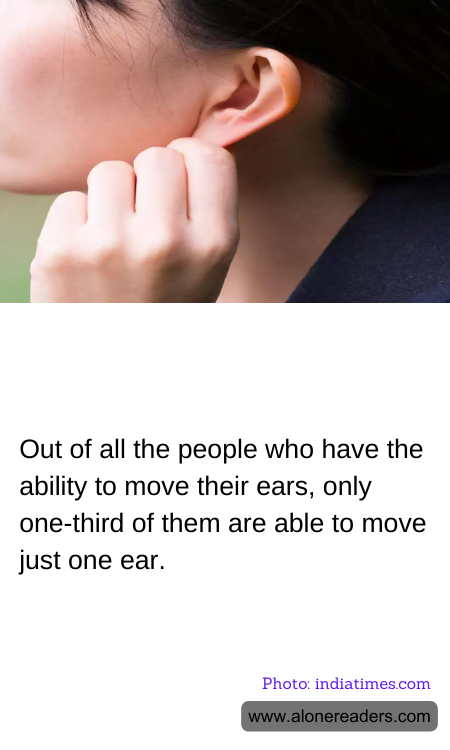
The neuromuscular control required to manage these tiny muscles separately for each ear is quite sophisticated. According to research, only about one-third of people capable of moving their ears can do so with one ear only. This skill underscores a higher level of neuromotor coordination. Such individuals can isolate the muscle actions on one side while keeping the other side stationary, a feat that mirrors abilities seen in activities requiring fine motor skills, such as playing certain musical instruments or performing intricate crafts.
The novelty of being able to move one ear independently can be an amusing party trick but also points to the broader spectrum of human motor abilities and the diversity in neuromuscular development among individuals. Learning how to control these small muscles can be akin to learning to wiggle one’s nose or raise one eyebrow – possible with practice but naturally easier for some than others due to genetic factors or early adaptation.
Ear movement ability, particularly the unilateral movement, often has no practical use in modern humans but offers an intriguing peek into the complex way our bodies are wired and evolve. It serves as a reminder of our connection to other mammalian species, and the intricate, sometimes unused, pathways our bodies still carry from our ancestors. Whether used as a party trick, or simply a peculiarity, the capability to move one’s ears independently – and indeed, the variations in human motor skills – demonstrates the fascinating diversity of the human species.