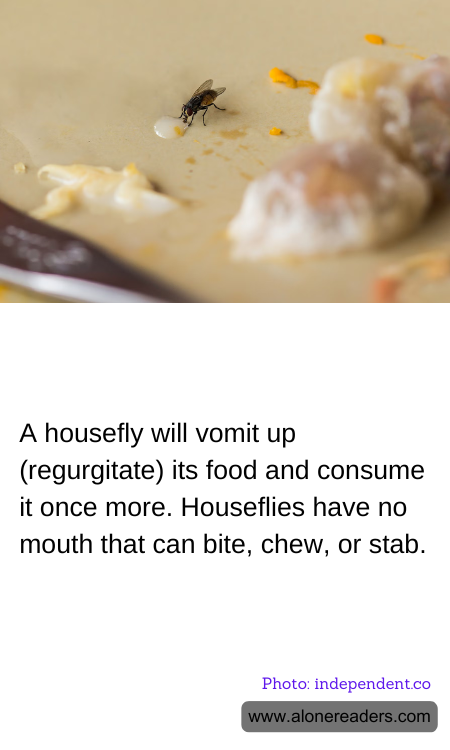
Houseflies, those ubiquitous insects often seen buzzing around homes and garbage bins, have a rather unusual method of consumption that might not sit well with the squeamish. Unlike many other insects or animals, houseflies do not possess a mouth capable of biting or chewing food in the traditional sense. Instead, they are equipped with a unique feeding mechanism that involves regurgitating their food to eat it again.
The mouthpart of a housefly is adapted to a sponging-sucking type, which is incredibly effective for their diet consisting primarily of liquid substances and soft solids. When a housefly lands on food, it first secretes saliva, which contains enzymes that predigest the food by breaking it down into a liquid form. This process is essential because houseflies can only ingest food in a liquid state.
However, if the food is not sufficiently soft or liquid, houseflies employ a method called regurgitation to aid their digestion. They will vomit up previously ingested food into the new food source. This regurgitant mixes with the new food, further breaking it down enzymatically into a slurry that the fly can consume. Once the mixture is adequately softened, the housefly sucks it up again, making the nutrients available for absorption.
This process of regurgitation is not just a curiosity—it's a vital part of the housefly’s feeding and digestion mechanism, allowing them to eat a broader range of foods than they could otherwise. However, this behavior also has implications for human health. Houseflies are often carriers of pathogenic bacteria and viruses due to their attraction to rotting or spoiled substances and their unhygienic feeding habits. When a housefly regurgitates on potential human food, it can deposit these pathogens, which may lead to diseases if ingested by humans.
Therefore, controlling housefly populations in human environments is crucial, typically through sanitary practices such as securing food sources, properly disposing of waste, and using barriers to prevent flies from entering living spaces. Understanding the unusual feeding habits of houseflies not only offers intriguing insights into the diversity of nature’s survival strategies but also highlights the importance of hygiene practices in preventing disease.
