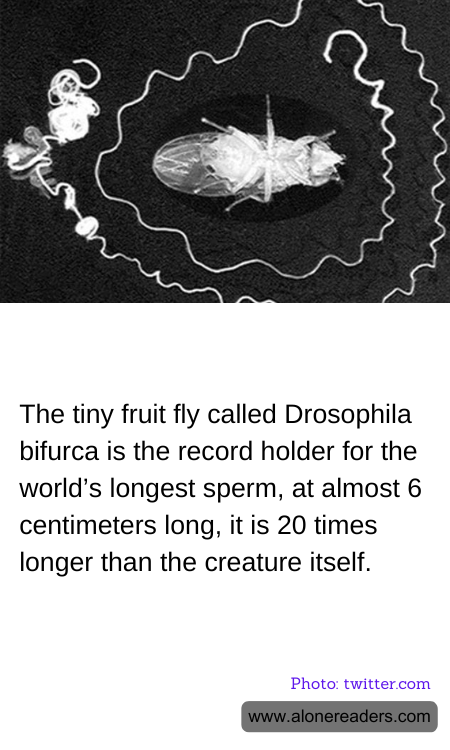
More About This Card
In the fascinating world of biology, the Drosophila bifurca, a seemingly insignificant species of fruit fly, holds an astonishing record that defies its diminutive size. Its sperm measures nearly 6 centimeters long, making it the longest known sperm in the animal kingdom, a staggering 20 times the length of its own body. This remarkable attribute is not just a biological curiosity but offers significant insights into the evolutionary strategies of reproduction.
Scientists studying Drosophila bifurca have found that within its tiny frame lies a tightly coiled thread of DNA that, when unspooled, would extend several centimeters. This supersized sperm is an evolutionary trait developed possibly as a way to maximize fertilization success. In the competitive world of fruit flies, where numerous males may mate with the same female, having longer sperm can be advantageous. The extended length increases the chances of successful fertilization as it can navigate through the female reproductive tract more effectively, outcompeting shorter sperm from other males.
The production of such enormous sperm, however, does not come without costs. It demands a significant amount of biological resources from the male. In Drosophila bifurca, a considerable portion of the male's body is dedicated to reproductive organs, which are essential for producing and storing their gigantic sperm. This adaptation means that there might be trade-offs with other life functions such as reduced ability to forage or evade predators.
In addition to its significant size, the reproductive strategy of Drosophila bifurca provokes questions about energy allocation, sexual selection, and reproductive fitness. The intriguing extremes of Drosophila bifurca's sperm are helping scientists understand more about how sexual reproduction can drive extreme physical adaptations and what factors may influence these evolutionary outcomes.
Such extreme biological phenomena underscore the complexity and diversity of life on Earth, illustrating how organisms can develop unusual characteristics to adapt to their environmental and biological niches. In uncovering the mysteries of Drosophila bifurca's immense sperm, researchers uncover broader principles that might apply not only to other insects but across a spectrum of life, shedding light on the intricate dance of evolution that shapes our natural world.