More About This Card
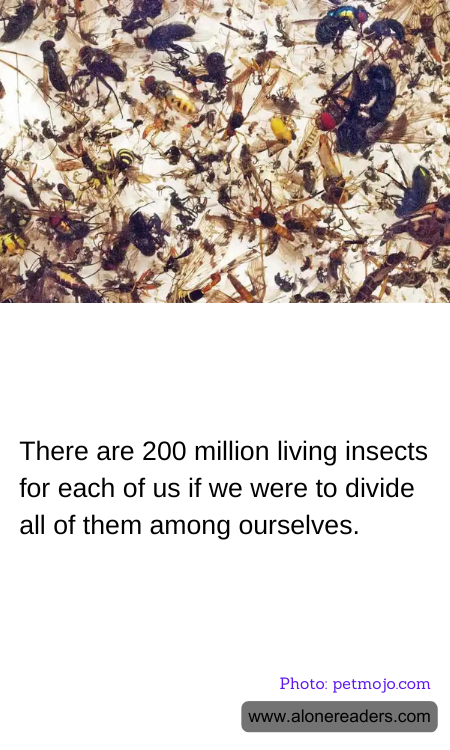
Imagine every single human on Earth being assigned a share of the planet's insect population. It would mean that for each person, there would be around 200 million insects. This astounding figure underscores not only the vast number of insects but also their overwhelming presence in the biosphere.
Insects play crucial roles in various ecosystems as pollinators, decomposers, and as a part of the food web. Their sheer numbers make them integral to the survival of many other species, including humans. For example, many agricultural systems worldwide rely heavily on insects for pollination, including crops such as almonds, apples, and cherries. Without these tiny pollinators, our diet and the global economy would look drastically different.
However, the relationship between humans and insects is not merely one of coexistence but also of significant impact. Human activities have led to a decline in insect populations through habitat destruction, pollution, and the use of pesticides. This decline, often referred to as the 'insect apocalypse,' poses a severe threat to biodiversity and the various ecosystem services that insects provide.
Conversely, the enormous number of insects also poses challenges. In some regions, insects that carry diseases such as malaria, dengue fever, and Zika virus are public health threats, affecting millions of people every year. Additionally, agricultural pests can cause significant damage to crops, impacting food security and economic stability.
The balance of maintaining the beneficial roles of insects while controlling their detrimental effects is a complex challenge. Innovative approaches such as integrated pest management and the cultivation of insect habitats in urban and agricultural areas are some of the strategies being employed to address these challenges.
This staggering statistic of 200 million insects per person serves as a poignant reminder of our shared responsibility to protect these tiny creatures and the intricate ecosystems they support. As we move forward, fostering a balanced coexistence with our six-legged companions will be essential for the sustainability of our natural world and the preservation of our own species.