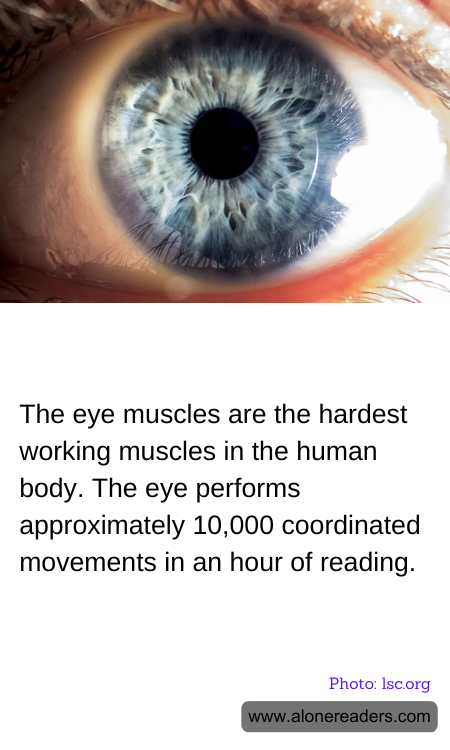
The human body is a complex system of organs and muscles, all of which perform crucial functions. Among the myriad muscles in the human body, the eye muscles are some of the hardest-working muscles we have. Responsible for every flicker, blink, and subtle shift in gaze, these muscles are constantly at work, even when we are not consciously directing them.
One of the most striking examples of the continuous labor these muscles endure can be observed while reading. In the span of just one hour of reading, the eye can perform about 10,000 coordinated movements. This high number of movements is due to the necessity to quickly adjust focus and follow lines of text, as well as to shift from word to word and line to line. These actions, while seemingly simple, involve a complex system of muscles functioning with high precision.
The eye has six muscles - the superior, inferior, lateral, and medial recti, and the superior and inferior oblique muscles. These muscles control the movements of the eye up and down, side to side, and in rotational directions. Unlike most muscles in the body that tend to relax when not actively being used, the eye muscles are perpetually active. They adjust the position of the eye for different visual stimuli and keep the visual image stable even as we move our heads or bodies.
Considering the incessant activity they undergo, eye muscles are incredibly resilient. However, like any part of the body, they can become fatigued or strained, leading to eye strain. This is especially common in today’s digital age, where extensive screen time is the norm. Symptoms of eye strain can include headaches, blurred vision, dry eyes, and neck or shoulder pain.
To mitigate these issues, it's recommended that individuals practice the "20-20-20 rule" - every 20 minutes, take 20 seconds to look at something 20 feet away. This simple exercise helps in reducing strain on the eye muscles by allowing them a moment to relax and refocus. Furthermore, ensuring proper lighting while reading and limiting screen time before bed are other measures that can help preserve optimal eye health.
In essence, our eye muscles are unsung heroes, tirelessly working to provide us with the power of sight, adjusting thousands of times an hour without pause. Their relentless activity is a testament to the incredible capabilities and endurance of the human body. It’s crucial that we take care of these muscles through proper habits and regular breaks, to maintain their health and our vision as well.
