More About This Card
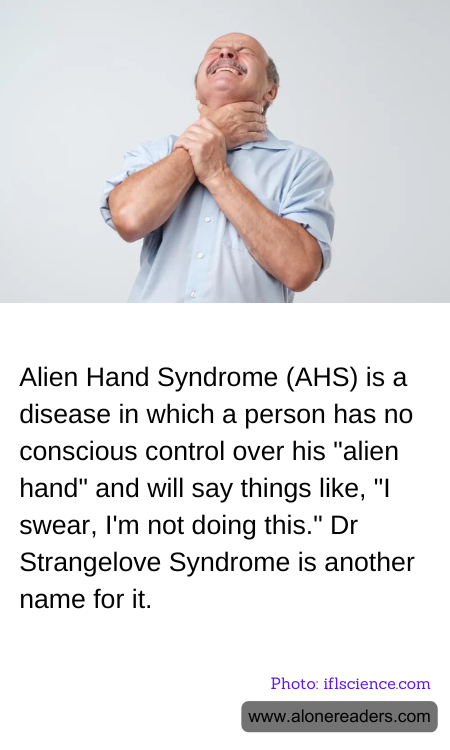
Alien Hand Syndrome (AHS), also known colloquially as Dr. Strangelove Syndrome, is a rare neurological disorder characterized by the apparent uncontrollable movements of one's hand or limb. Individuals with this syndrome experience their hand acting as if it has a will of its own, performing complex actions without the person’s conscious intent. The term was popularized in part by the film "Dr. Strangelove," where a character's arm seems to move independently, humorously saluting without the person's control.
The condition typically arises from brain injuries, or neurological surgeries, and is most commonly associated with procedures involving the separation of the two hemispheres of the brain, such as corpus callosotomy. It can also occur in cases of stroke, tumor, aneurysm, or severe infections of the brain. These interruptions in normal brain function create a scenario where the hand and arm seem to become semi-autonomous, often causing significant distress to the affected person.
AHS is classified into several types depending on the cause and the region of the brain that is affected. Frontal type, for instance, originates from damage to the frontal lobe and often results in purposeful movements like reaching and grabbing. Meanwhile, the callosal type results when the corpus callosum, the part of the brain that connects the two cerebral hemispheres, is compromised. This type tends to feature inter-manual conflict, a phenomenon where one hand acts at cross-purposes to the other.
Diagnosis of Alien Hand Syndrome can be complex, primarily because the disease is relatively rare and symptoms may initially appear psychological rather than physiological. Neurological examinations, combined with imaging techniques such as MRI and CT scans, are used to pinpoint the exact cause and location of the brain anomaly.
Living with AHS can be challenging as the "alien" hand can perform unwanted actions, such as undressing oneself or interfering with the other hand’s activities. Treatment typically revolves around managing the symptoms, as there is currently no cure. Techniques can include keeping the hand occupied with objects or using the other hand to control it, and in some cases, medications that help manage cognitive functions might be prescribed.
Despite its portrayal in popular media as somewhat humorous or bizarre, Alien Hand Syndrome is a serious condition that poses real challenges for those who have it. It dramatically affects day-to-day activities, requiring adjustments to many aspects of personal and social life. More research into this rare condition is necessary to find better ways of managing it and hopefully, one day, curing it.