More About This Card
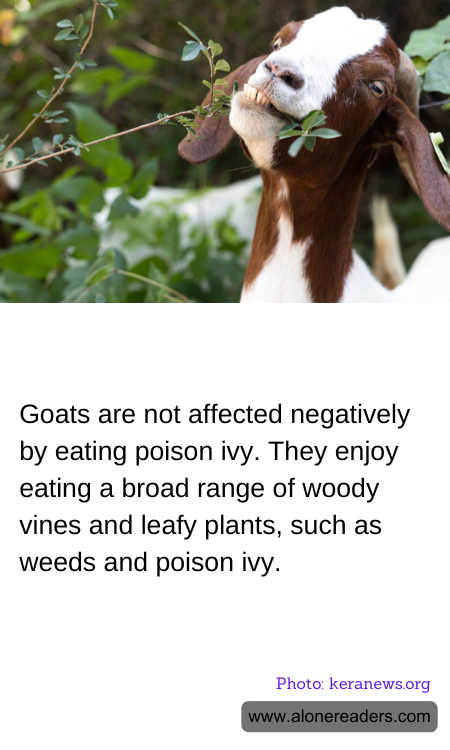
Goats have a unique place in the natural management of vegetation and landscape, including their peculiar ability to consume and tolerate plants like poison ivy without negative effects. This makes them an environmentally friendly alternative to chemical weed killers and heavy machinery in managing overgrown areas, contributing positively to ecological balance and biodiversity.
Unlike humans, goats do not suffer from the irritating consequences of poison ivy, which typically causes rashes and itching due to urushiol, an oil found in the plant. The digestive system of goats processes these plants in a way that neutralizes these harmful effects. This capability is heightened by the anatomical makeup of their mouths; their tough lips and specialized digestive system allow them to munch on a variety of vegetation that might be harmful to other species.
Their appetite for such a broad spectrum of vegetation includes woody vines, leafy plants, and weeds, making goats incredibly effective as living lawn mowers and natural weed suppressants. In many parts of the world, they are used in controlled grazing systems which help clear underbrush and decrease the risk of wildfires, while also maintaining the health of the soil and reducing erosion.
The use of goats in poison ivy control particularly benefits areas where manual or chemical removal of vegetation is undesirable or impractical. For example, steep hillsides, rocky terrains, and proximity to water sources where herbicides may pose a risk to aquatic life are perfect scenarios for goat intervention. Furthermore, this method does not contribute to pollution, unlike conventional mechanical or chemical methods.
In addition to environmental benefits, utilizing goats in this way can also be cost-effective. The need for less manual labor and the reduction in chemical use can significantly cut maintenance budgets for large properties and public land areas. Goat grazing offers a fascinating glimpse into sustainable land management practices that harness the natural behaviors and dietary preferences of animals to maintain and enhance our landscapes. This not only aids in controlling invasive species like poison ivy but also demonstrates a harmonious intersection between agriculture and natural ecosystem management.