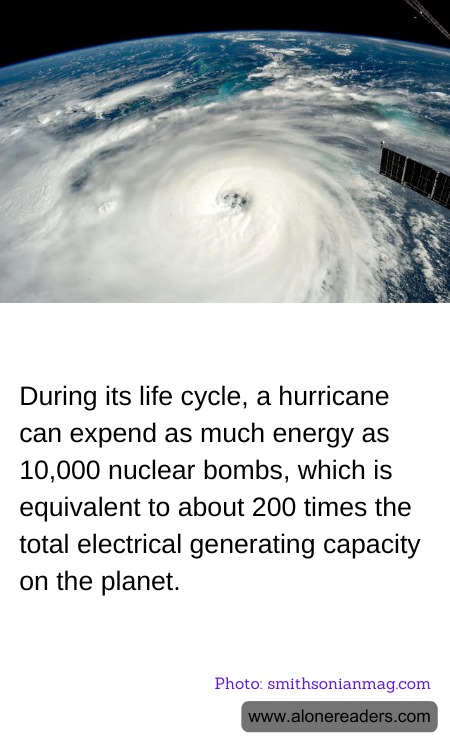
Hurricanes are one of the most powerful forces in nature, showcasing immense energy and the capacity to cause widespread devastation. During its lifecycle, a hurricane can release an amount of energy comparable to 10,000 nuclear bombs. This staggering figure highlights not only the intensity of these storms but also their potential for destruction.
The energy a hurricane releases comes primarily from the condensation process that occurs in the storm's system. As warm ocean water evaporates, it fuels the hurricane with heat energy, which is converted to kinetic energy—the energy of motion—that drives the hurricane's winds. The transformation of heat into mechanical energy in a hurricane is a remarkably efficient process, and it is this conversion that enables the storm to accumulate and expend a vast amount of energy.
To put this in perspective, the total energy a hurricane can dissipate, primarily through its wind patterns and rain-induced cooling, is around 200 times the world's total electrical generating capacity. This illustrates not only the power of a single storm but also underscores the vast disparity between natural energy processes and human-made energy generation.
Understanding the energy dynamics of hurricanes is crucial for meteorologists and scientists who predict storm paths and potential impacts. This knowledge helps in issuing timely warnings and preparing mitigation strategies to safeguard lives and property. It also raises awareness about the limitations of human infrastructure when confronted with the scale of natural phenomena.
Moreover, the immense power of hurricanes also serves as a reminder of the broader impacts of climate change. As global temperatures rise, the warmer ocean waters can lead to more intense hurricanes, potentially increasing the frequency at which these massive energy releases occur. This potential trend poses serious implications for coastal communities and necessitates global attention towards improved environmental policies and climate change mitigation efforts.
In conclusion, the sheer energy release of hurricanes is not just a meteorological curiosity but a powerful indicator of the dynamic processes within Earth's climate system. It illustrates the formidable forces of nature and the vital importance of understanding and preparing for these natural phenomena as part of broader environmental and safety strategies.
