More About This Card
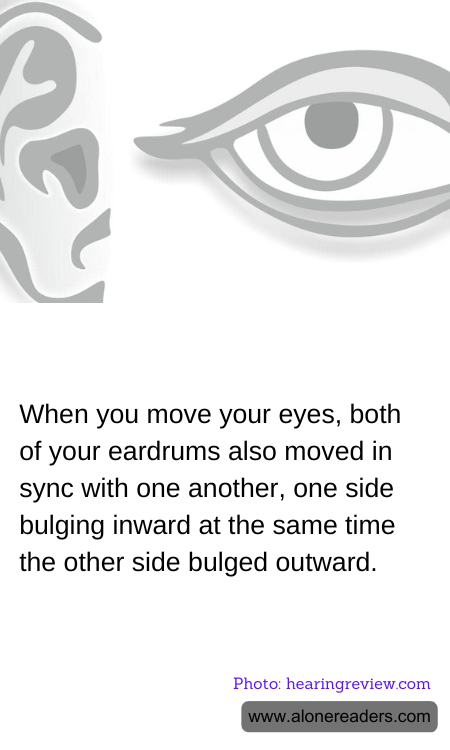
When you move your eyes, an intriguing physiological synchrony occurs: your eardrums move in coordination. This phenomenon, discovered relatively recently, highlights a subtle but fundamental connection between the mechanisms of hearing and vision. As you shift your gaze from one point to another, one eardrum bulges inward while the counterpart bulges outward simultaneously. This coordinated movement occurs due to the activation of the tensor tympani and stapedius muscles in the middle ear.
These muscles typically contract reflexively to dampen the sound of your own chewing or to protect the inner ear from loud noises. However, their synchronized movement with eye motions adds another layer to their function, suggesting a more integrated sensory interaction than previously understood. This connection might be an evolutionary mechanism intended to help orient the auditory spatial perception according to where one looks. For instance, when you turn your gaze towards a sound source, the associated movements in your eardrums could help your brain to more rapidly and accurately localize the sound.
Further research into this phenomenon could unravel new insights into neurological diseases where these processes might be disrupted, such as in certain types of vertigo where patients have trouble with spatial orientation. This discovery also lays the groundwork for more holistic approaches to treating auditory or visual dysfunctions, emphasizing the interconnectedness of our sensory systems. Understanding these intricate bodily processes not only widens our comprehension of human physiology but also enhances our capability to manipulate these mechanisms for better health outcomes through integrated medical strategies.