More About This Card
Glass, one of the most versatile materials used by humans, not only has its origins in the ingenuity of civilizations past and present but is also a fascinating product of natural phenomena. When nature mimics the conditions found in human-made glass production—extreme heat and rapid cooling—the results are strikingly beautiful and unique forms of natural glass.
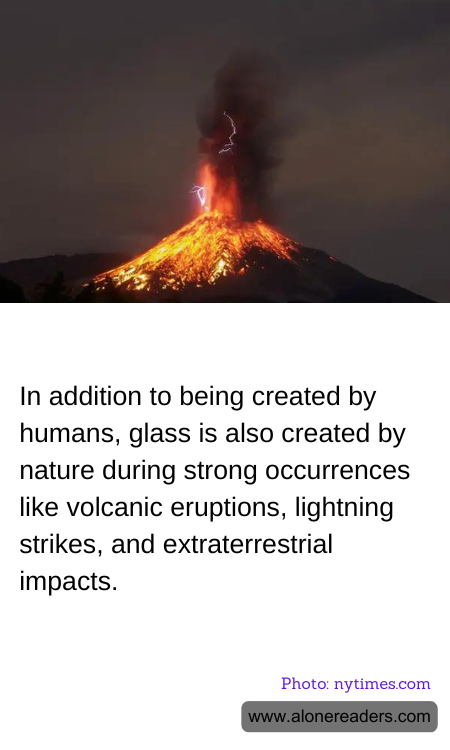
Volcanic eruptions are powerful natural events capable of creating glass. When volcanoes erupt, they generate intense heat that melts silica-rich rocks and sand. As this molten material is ejected and cools rapidly upon exposure to air or water, it forms a natural glass called obsidian. Prized for its sharpness and smooth texture, obsidian has been used by various cultures for tool-making and ornamental purposes throughout history.
Another dramatic way glass is naturally formed is through lightning strikes. When a lightning bolt strikes sandy soil or beaches, the immense temperature—up to 30,000 degrees Celsius—melts the sand to form tubular structures known as fulgurites. These fragile, glassy tubes capture the path of the lightning through sand, freezing it in time as a delicate, branching sculpture. Fulgurites vary greatly in form and size, depending on the composition of the sand and the details of the lightning strike.
Furthermore, extraterrestrial impacts by meteorites can also lead to the formation of natural glass. When these fast-moving space rocks crash into the Earth, the energy released by the impact melts the surrounding rock and soil, which then cools rapidly to form a glassy substance known as tektites. These dark, often translucent pieces of natural glass are found scattered in and around known meteorite impact sites and are the subject of scientific study as well as collector interest.
Besides offering a trace of Earth's dynamic processes, natural glasses like obsidian, fulgurites, and tektites reveal the inherent connection between the planet's geophysical forces and the materials it can produce. These natural glasses are not just scientific curiosities but are also reminders of the powerful forces of nature that operate without human intervention. Their existence adds a profound depth to our understanding of the natural world, showing that beauty and utility can emerge from the most tumultuous of events. While human-made glass has certainly shaped civilization in countless ways, nature's version of glass provides a humbling glimpse into the raw creative power of Earth’s elements.