More About This Card
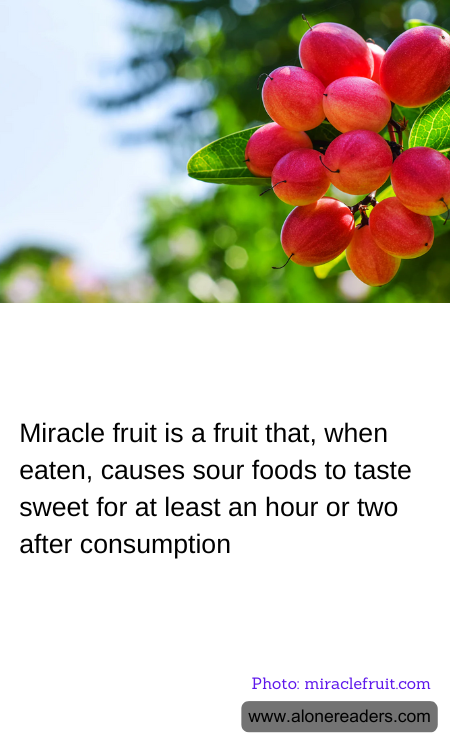
Miracle fruit, scientifically known as Synsepalum dulcificum, is a remarkable small red berry native to West Africa. It has the extraordinary ability to modify taste perceptions, making sour and bitter foods taste sweet. This effect is due to a glycoprotein named miraculin that binds to taste buds on the tongue and acts as a sweetness inducer when it comes in contact with acids.
The miracle fruit itself is not sweet. Instead, it’s the interaction with other foods that brings about the sweet sensation. The process begins when the miraculin in the fruit binds with the taste receptors on the tongue. Once the tongue encounters something acidic, like lemon or vinegar, the miraculin changes shape, activating the sweet receptors, thus overpowering the typical sour or bitter taste. The effect can last from 30 minutes to up to two hours, offering a unique taste experience.
The implications of miracle fruit are vast, particularly in dietary management and culinary arts. For those looking to reduce sugar intake, miracle fruit can serve as a natural alternative to sugar. Diabetics and others who must manage blood sugar levels might find it particularly useful, as it provides a way to enjoy the taste of sweetness without the sugar. Moreover, it adds a twist to culinary practices, offering chefs and food enthusiasts a way to experiment with flavor profiles and create innovative dishes that can surprise and delight the palate.
Furthermore, there is ongoing research into the potential health benefits of miracle fruit. Preliminary studies suggest that it might help in improving insulin sensitivity and reducing calorie intake, which could be beneficial for obesity management. However, more scientific research is needed to fully understand its health implications and efficacy.
The use and popularization of miracle fruit in Western cultures remain relatively moderate, often marketed as novelty items or dietary supplements. In its native region, it has been used for centuries, both as a food enhancer and in traditional medicine. It's available fresh, in tablet form, or as freeze-dried granules, each form preserving the miraculin to various extents.
Miracle fruit is more than just a curiosity; it’s a testament to the complex interactions between our senses and the natural world, offering both practical uses in diet management and potential health benefits, which makes it an intriguing subject for further exploration and application.