More About This Card
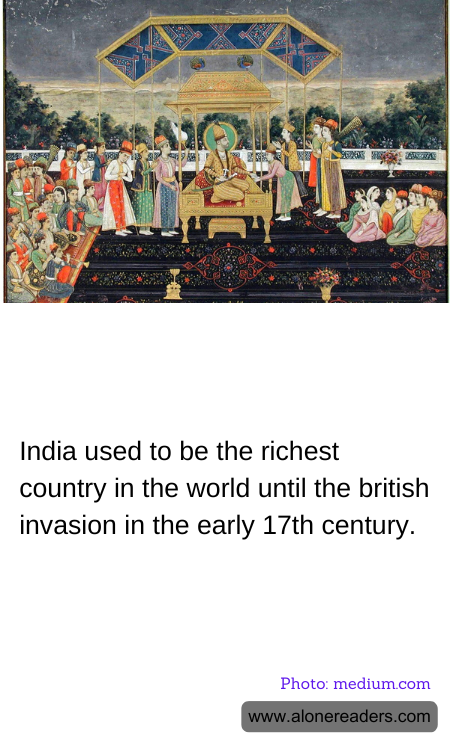
India has long been described as a rich and flourishing land, its wealth both in material and cultural heritage attracting explorers, invaders, and traders through the ages. Prior to the British invasion in the early 17th century, India indeed was among the wealthiest regions in the world. This prosperity was not merely due to the abundance of precious metals and gems like gold, diamonds, and spices, but also because of the fertile land, diverse ecosystems, and strategic trading locations, which positioned it as a crucial hub in early global trade networks.
The flourishing Indian civilization was supported by advanced agriculture, exemplary urban planning seen in cities like Harappa and Mohenjo-Daro of the Indus Valley Civilization, and a well-organized economic structure. Trade routes such as the Silk Road added to the riches, facilitating the exchange of goods and knowledge with distant territories like Central Asia, the Middle East, and Europe. Indian textiles, spices, and handicrafts were particularly sought after, bolstering the country's economy and establishing it as a powerhouse of cultural export.
However, the entry of the British East India Company marked the beginning of a drastic change. During this period, the British did not just partake in trade but slowly installed a political foothold, exploiting the fractious nature of the subcontinent’s then reigning powers. Through strategic maneuvers and military might, the British established colonial dominance by the mid-19th century, heralding a darker period for India’s wealth.
The economic policies instituted by the British were pointedly oppressive—aimed at serving Britain's own industrial needs. This resulted in the deindustrialization of some of India's craftsmen and a forced focus into agriculture, specifically in crops beneficial to Britain like indigo and tea, which displaced the previously self-sufficient food crops leading to widespread food shortages and famine. The notorious draining of resources and treasures followed, diminishing India’s wealth considerably. The construction of railways, while often lauded as a developmental step, essentially facilitated the easier movement of extracted resources to ports for shipment to Britain.
The decline of India's wealth during British rule is a stark contrast to its pre-colonial prosperity. By the time India achieved independence in 1947, it faced significant economic challenges, including considerable poverty and a depleted economy. The journey post-independence has been one of rebuilding and restructuring towards regaining its historical prosperity.
Today, reflecting on this rich-past-turned-tumultuous, India leverages its vast natural and human resources to reclaim a prominent position on the global stage through technological advancements, a booming service sector, and a growing emphasis on trade and foreign investments, making strides towards achieving its old glory in a new-age scenario.