More About This Card
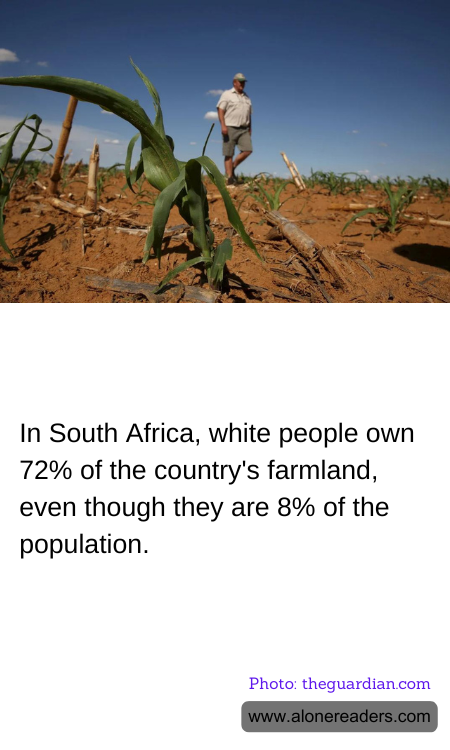
Land ownership in South Africa has been a contentious issue for decades, largely due to the historical legacies of colonialism and apartheid. Despite the end of apartheid over two decades ago, the disparity in land ownership remains stark. White South Africans, who constitute approximately 8% of the population, still own around 72% of the farmland. This disproportionate ownership reflects deep-rooted inequalities that persist in the South African society, making land reform a critical and emotive subject.
The South African government has implemented various land reform policies aimed at redressing historical injustices and distributing land more equitably among its citizens. However, progress has been slow and fraught with challenges. Land redistribution, land restitution, and tenure reform are the main pillars of the government's approach to land reform. Land redistribution involves transferring land from white owners to previously disadvantaged groups. Land restitution allows individuals or communities who were dispossessed of their property as a result of racially discriminatory laws and practices to claim their land back. Tenure reform aims to secure the land rights of the marginalized, particularly those living in communal areas and on commercial farms.
The complexities of these land reform programs often lie in their implementation. Challenges include bureaucratic inefficiencies, corruption, inadequate funding, and lack of political will. Moreover, concerns about food security and economic stability also play a significant role in the debate over land reform. Critics argue that poorly planned redistribution could undermine agricultural productivity and threaten economic growth, citing examples from other countries where similar policies have had adverse effects.
Conversely, proponents of aggressive land reform argue that addressing land disparity is essential not only for social justice but also for sustainable economic development. They believe that equitable land distribution can lead to increased agricultural activity and improve livelihoods among the majority of South Africans who are still disadvantaged.
In conclusion, while the need for land reform in South Africa is unequivocal, the path towards it is laden with social, economic, and political challenges. The government faces the delicate task of balancing the urgent need for reform with the potential risks it poses to the country's stability and prosperity. Solutions need to be both innovative and inclusive, ensuring that they contribute to both social justice and economic viability for all South Africans. The resolution of this issue is crucial for the country’s progress and for healing the divisions that have long characterized its past.