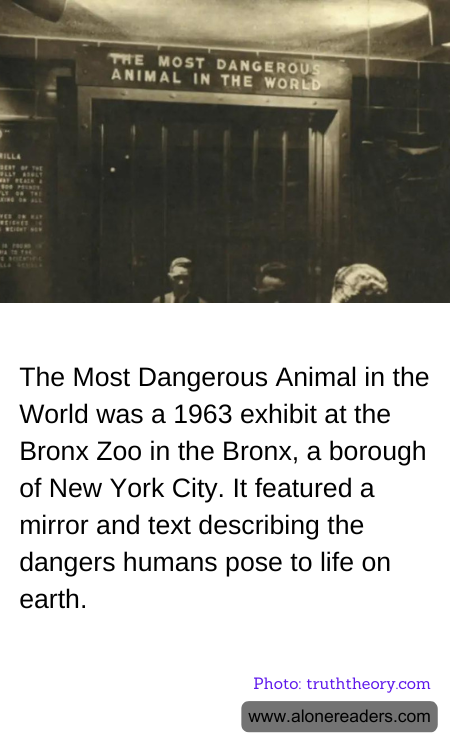
In 1963, an unusual exhibit was unveiled at the Bronx Zoo in New York City, which rather than displaying a wild beast or exotic creature, featured only a mirror. Titled "The Most Dangerous Animal in the World," this exhibit confronted visitors with their own reflections. Accompanying the mirror was a sign that boldly declared the very visitor looking into the mirror to be the most dangerous animal of all. This thought-provoking presentation aimed to highlight the significant impact humans have on the natural world and the plethora of dangers that human activity poses to Earth's biodiversity and ecosystems.
The concept behind this exhibit was rooted in growing environmental and ecological concerns during the early 1960s. This was a time when environmental consciousness was beginning to gain traction among the public and policymakers alike. Rachel Carson's seminal book "Silent Spring," which detailed the adverse effects of pesticides on the environment, had been published just a year prior, in 1962, fueling public debate on human impacts on the earth.
Through its stark simplicity, the exhibit at the Bronx Zoo aimed to inspire introspection and responsibility among its visitors. It suggested that while humans have the capacity for tremendous creativity and benevolence, they also possess the potential for destruction and harm, making them the most dangerous animals on the planet. The exhibit highlighted issues such as habitat destruction, overexploitation of resources, pollution, and the introduction of invasive species that disrupt local ecosystems.
The mirror in the exhibit acted as a powerful symbol, forcing each visitor to confront their personal accountability in the environmental challenges of the time. It served as a reminder that conservation and change can begin with individual actions.
Despite its historical context, the message of "The Most Dangerous Animal in the World" remains profoundly relevant today. Current global challenges—such as climate change, biodiversity loss, and unsustainable resource use—underscore the continuing influence of human activity on the planet. The exhibit's legacy continues in encouraging a reflective and critical approach towards understanding and mitigating human impacts on the environment for a sustainable future.
