More About This Card
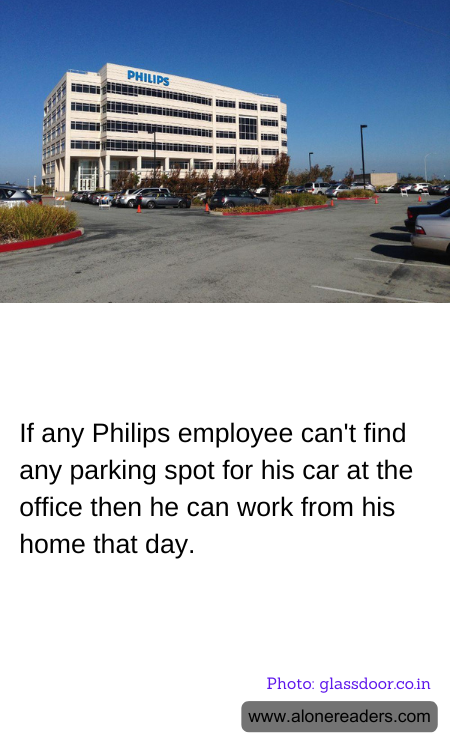
In an age where workplace flexibility is increasingly valued, Philips has introduced a novel approach to parking challenges faced by its employees. On days when an employee arrives at work only to find that there are no parking spots available, they have the option to work from home. This policy not only alleviates the stress of finding a parking spot but also enhances employee satisfaction by providing them with an alternative that supports a better work-life balance.
This initiative by Philips recognizes the shifting dynamics of modern work environments. As urban areas become more congested and parking becomes a premium commodity, companies are compelled to think creatively about solutions that can ease these daily stresses. Philips’ approach can significantly reduce the time employees spend circling the office for a parking space, which can lead to a more productive and happier workforce.
Moreover, this policy could potentially contribute to environmental sustainability. By reducing the need for employees to drive around looking for parking, Philips is indirectly cutting down on carbon emissions associated with vehicle idling and additional driving. It also subtly encourages employees to consider alternate means of transportation, knowing that the work-from-home option is available if parking is a hassle.
Additionally, this flexibility can be particularly beneficial during peak times such as holidays or special events, when parking issues are exacerbated. It ensures that the rhythm of work is not disrupted and that employees maintain their productivity without getting frustrated over parking issues.
Overall, Philips’ innovative approach could set a precedent for other companies grappling with similar issues. It offers a practical solution that respects employees' time, promotes a greener environment, and supports a more adaptive work culture. As we move forward into an era where the traditional nine-to-five, office-bound work model becomes increasingly outdated, such flexibility could be key to attracting and retaining top talent.