More About This Card
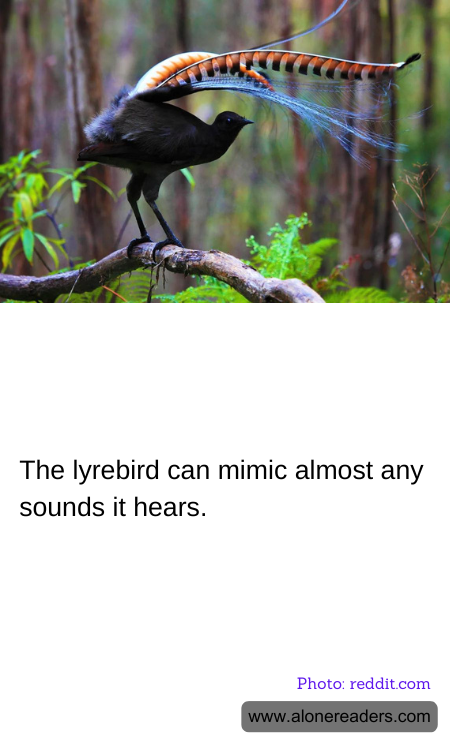
The lyrebird, a ground-dwelling Australian bird, is nature's master mimic. Found predominantly in the rainforests of eastern Australia, these birds possess an astonishing ability to imitate natural and artificial sounds they hear around them. Renowned for their spectacular mimicry skills, lyrebirds can reproduce the calls of at least 20 other bird species as well as an array of other sounds from their environment. Remarkably, this can range from chainsaws and camera shutters to car alarms and human voices.
There are two primary species of lyrebirds: the superb lyrebird and the Albert's lyrebird, with the former being more widely recognized due to its more extensive vocal abilities and the striking tail feathers of the male, which are shaped like a lyre when displayed during courtship rituals. These tail feathers enhance their appeal during their elaborate mating dances and performances.
Lyrebirds are not just random mimics; they use their capabilities strategically. Males often incorporate an impressive variety of sounds into their mating calls, aiming to attract females with the breadth and complexity of their audio repertoire. This can be seen particularly during the winter breeding season, when male lyrebirds construct special display mounds from which they perform their vocal exhibitions, hoping to lure in a mate with both visual and auditory displays.
Studies suggest that the lyrebird’s mimicry ability might also play a role in territorial defense, tricking intruders by mimicking the alarm calls of various species. Scientists believe that such imitations could be a strategy to confuse or scare away rivals, thus safeguarding their habitat and breeding space.
Conservation efforts are crucial for lyrebirds, as their habitats face threats from logging, land clearing, and bushfires. Preserving their environment is not only essential for the lyrebirds themselves but also for the ecological balance of their habitats, as they play a significant role in forest regeneration through their foraging activities, which help in the dispersal of fungal spores essential for healthy vegetation.
Lyrebirds' exceptional ability to mirror the sounds around them not only underscores their significance as a species worthy of awe and protection but also highlights the intricate connections within ecosystems and the profound impacts of human activity on wildlife. As ambassadors of natural wonder, they remind us of the rich tapestry of life that requires our respect and conservation efforts.