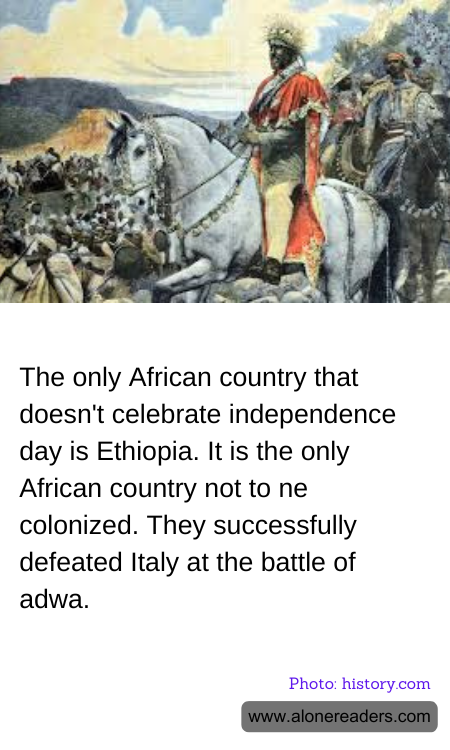
Ethiopia stands unique among African nations as the only country that has never been colonized, hence it does not celebrate an Independence Day like its continental counterparts. This distinctive historical trajectory is rooted in its victory at the Battle of Adwa in 1896, where Ethiopian forces won a significant victory against Italian invaders. The confrontation occurred in the northern part of Ethiopia and remains a powerful symbol of resistance against colonization. Led by Emperor Menelik II, the Ethiopian army, composed of various ethnic groups united for the defense of their land, managed to decisively defeat the Italian troops.
This triumph did more than just secure Ethiopia's sovereignty - it resonated across the continent and the world as a beacon of hope for other African nations under colonial rule. It demonstrated that an African army could defeat a European power and thereby inspired the burgeoning resistance movements across colonized countries worldwide. Ethiopia's unique history has profoundly influenced its national identity and its role in international politics. It has fostered a strong sense of pride and unity among Ethiopians, which is celebrated in their rich cultural traditions and public life.
Instead of celebrating Independence Day, Ethiopia commemorates its heroes and their victory at the Battle of Adwa with the Victory of Adwa celebration held annually on March 1. This day not only pays homage to those who fought but also serves as an educational moment for younger generations, reminding them of their forebears' bravery and the importance of sovereignty.
The narrative of Ethiopia as a never-colonized nation also played a significant role during the establishment of the Organization of African Unity (OAU) in 1963, which later became the African Union. Based in Addis Ababa, the capital of Ethiopia, the organization's location in a non-colonized country highlighted its mission to advocate African solidarity and independence from foreign domination. Moreover, this history has imbued Ethiopia with a sense of responsibility to lead various pan-African initiatives, championing cooperation and development across the continent.
Thus, Ethiopia’s distinct history shapes not only its national celebrations but also its position in regional and global affairs, as it continues to leverage its historic legacy of resistance and independence to forge a future that honors its past while looking towards progressive development.
