More About This Card
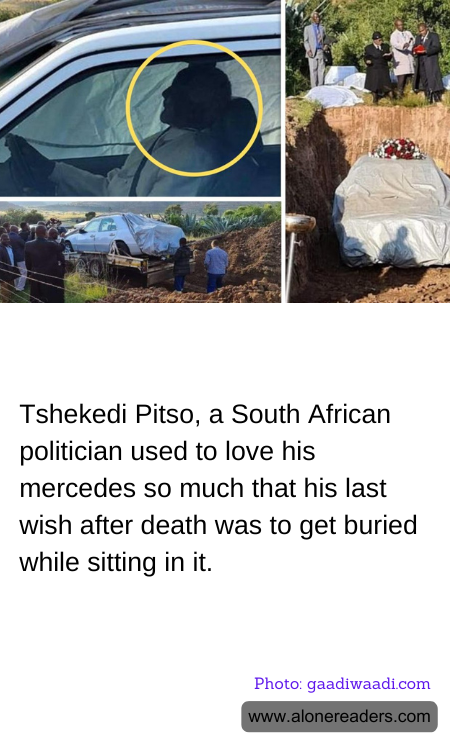
In a tale that sounds more like the script of an eccentric movie, Tshekedi Pitso, a South African politician from the Eastern Cape province, indeed had a last wish that was as extravagant as it was heartfelt. Pitso, who was a prominent figure in his community and a member of the United Democratic Movement, had an unabashed fondness for his Mercedes-Benz. This vehicle was more than just a means of transport; it symbolized his success and achievements. In a gesture that underscores the depth of his attachment to the car, Pitso made it known that his final wish was to be buried in his beloved Mercedes.
This unusual request was honored in 2020, turning heads not only in South Africa but around the world. The visual of Pitso’s burial was striking and memorable: the late politician, dressed in his finest suit, was seated behind the wheel of his Mercedes, which was then positioned inside a large burial pit. This act of being interred in his car was not just about fulfilling a last wish but was also a statement, reflecting his personality and the way he lived his life—boldly and distinctively.
Pitso’s unique burial sparked a range of reactions. While some viewed it as an ultimate gesture of luxury and a testament to the man’s flamboyant lifestyle, others saw it as an expression of individualism and a profound connection to his possessions that brought him joy and pride during his lifetime. This event also opened up broader discussions about cultural practices and the modern interpretations of status and wealth in death as well as life.
Moreover, this incident highlights how personal choices in death, like in life, can reflect broader cultural, economic, and social statements. In many parts of Africa, funerals are elaborate affairs that involve extensive community participation and can reflect the status of the deceased within that community. By choosing to be buried in his Mercedes, Pitso both embraced and elevated this cultural norm, ensuring that his legacy would not soon be forgotten and sparking conversations about the ways in which people choose to remember and honor their loved ones.
While some may view the decision to be interred in a luxury car as over-the-top, for Tshekedi Pitso, it was a fitting farewell that encapsulated his life and passions. His story is a reminder of the diverse ways in which cultures approach death and memory, and it begs the question of how material symbols are used to denote lives well-lived.