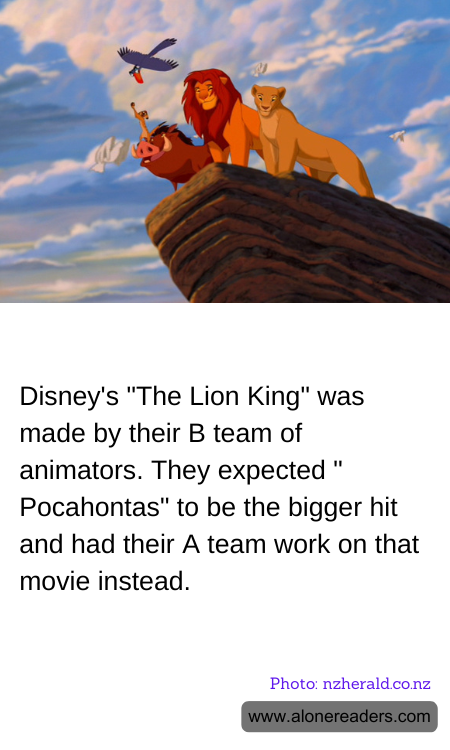
More About This Card
When Disney embarked on the production of "The Lion King" in the early 1990s, it was seen as a secondary project compared to the much-anticipated "Pocahontas," which was being developed simultaneously. Expectations within the company were that "Pocahontas," with its historical roots and romantic storyline, would be the more significant and prestigious of the two. Consequently, Disney allocated its top-tier animation team, often referred to as the 'A team,' to work on "Pocahontas." This left "The Lion King" in the hands of what was considered the 'B team' of animators, a group largely made up of less experienced artists and those not yet proven with major projects.
Ironically, "The Lion King" not only succeeded but went on to become one of the most beloved and successful films in Disney's history. Released in 1994, it broke box office records and earned immense critical acclaim, ultimately securing a lasting legacy in both theater and film through its captivating music, compelling story, and stunning visuals. The film's success was underscored by its innovative approach to storytelling and character development, which resonated deeply with audiences worldwide.
Contrastingly, although "Pocahontas" was released a year later in 1995 and received praise for its animation style and musical score, it did not achieve the same level of commercial success or cultural impact as "The Lion King." This outcome was particularly surprising given the distribution of resources and talent, highlighting an interesting dynamic within creative projects where less anticipated works can sometimes outshine their higher-profile counterparts.
The story behind the making of "The Lion King" serves as a fascinating example of how creativity and innovation can flourish even without top-tier resources, and it emphasizes the unpredictable nature of artistic success. This reversal of fortunes between the two films is a testament to the unpredictable nature of the film industry, where ultimately, the stories that resonate most with audiences are not always the ones initially expected to succeed.