More About This Card
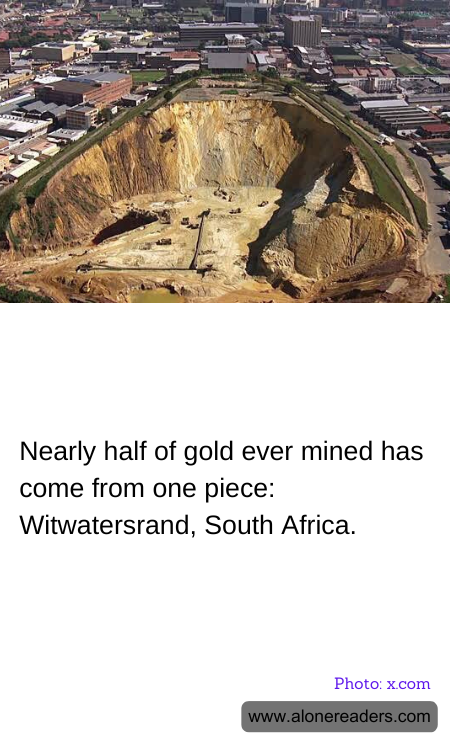
The Witwatersrand Basin in South Africa is one of the most significant gold mining areas in the world, contributing almost half of the gold ever mined. This incredible geological phenomenon, commonly referred to simply as "the Rand," spans an area of around 400 kilometers through the Gauteng Province and has been a central focus of gold extraction since 1886 when gold was first discovered there.
The discovery of gold in the Witwatersrand was pivotal, turning Johannesburg into one of the fastest-growing cities globally as prospectors, miners, and fortune-seekers flocked to the area. Its impact extended beyond immediate economic contributions and significantly influenced South Africa's socio-political landscape. The apartheid system was partly underpinned by the labor demands and wealth generated by the gold mining industry, emphasizing the profound implications of the basin not just economically, but also socially and politically.
Geologically, the gold in the Witwatersrand Basin is found in ancient sedimentary rocks dated back over 2.5 billion years. These gold-bearing rocks are part of the larger Witwatersrand Supergroup, which is exposed in sections around the basin's edge but mainly lies underground. This has necessitated deep-level mining, an activity fraught with challenges, including extreme depths, high temperatures, and seismic activity. Some mines operate at depths more than 4 kilometers below the surface, making them some of the deepest mines in the world.
Mining techniques have evolved over the decades from panning and sluicing in the early days to more sophisticated methods necessary for the extraction at such depths. Today, despite the inherent challenges, the Rand remains a major source of gold, and mining companies continue investing heavily in the region. However, the future of mining in the Rand is subjected to ongoing debates concerning economic viability and environmental sustainability. As gold reserves become harder to reach, the costs associated with extraction have risen, often prompting questions about the long-term future of mining in the area.
Moreover, the ecological impact of mining operations has been significant, leading to environmental concerns ranging from water pollution to seismic disturbances and ecological degradation. These challenges highlight the complexities faced by the region, balancing economic benefits with environmental and health implications for local communities and beyond.
In conclusion, the Witwatersrand Basin's immense contributions to global gold markets are undisputed, but its story is also a cautionary tale of the environmental and social costs intertwined with natural resource extraction. Its legacy is a mosaic of wealth and economic growth shadowed by environmental damage and socio-economic disparities, echoing the broader narrative of resource-rich regions worldwide.