More About This Card
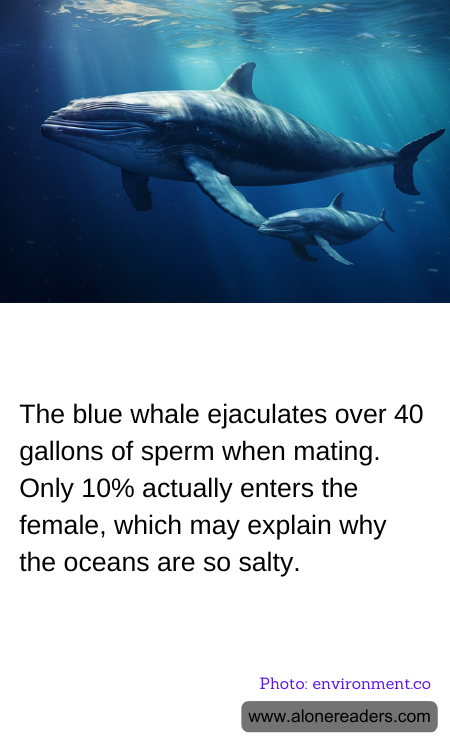
The statement that the saltiness of the ocean is due to blue whale sperm is a myth and scientifically inaccurate. The salinity of the ocean is largely a result of the weathering of rocks and the minerals, like sodium and chloride ions, carried into the oceans by freshwater sources such as rivers. Over millions of years, these minerals have accumulated to give the oceans their salty character.
Regarding blue whale reproduction, it is true that these creatures produce a significant amount of sperm during mating, partly to ensure successful fertilization in the vast ocean environment. However, attributing the overall saltiness of the oceans to this is purely a humorous or exaggerated myth. In reality, the contribution of blue whale sperm to ocean salinity is negligible when compared to geological and hydrological processes.
Blue whales are indeed fascinating creatures, being the largest animals ever known to have lived on Earth. Their mating rituals and reproductive habits are subjects of interest for marine biologists and researchers. When a male and female mate, a substantial amount of sperm is indeed released, but this is typical of many aquatic species where fertilization occurs externally. The survival of these species often depends on the production of large quantities of reproductive material, as the likelihood of any single sperm or egg meeting and resulting in successful reproduction is very low.
Furthermore, the reproductive output of any species, including blue whales, is a drop in the bucket compared to the vast volumes of the world's oceans, which cover approximately 70% of the Earth's surface. The notion that animal sperm influences ocean salinity is a misconception and doesn't hold water under scientific scrutiny. The study of ocean salinity continues to be a crucial aspect of understanding climate change and oceanic health, driven by more significant factors like temperature shifts, freshwater influxes, and alterations in sea ice concentration, rather than the reproductive activities of marine wildlife.