More About This Card
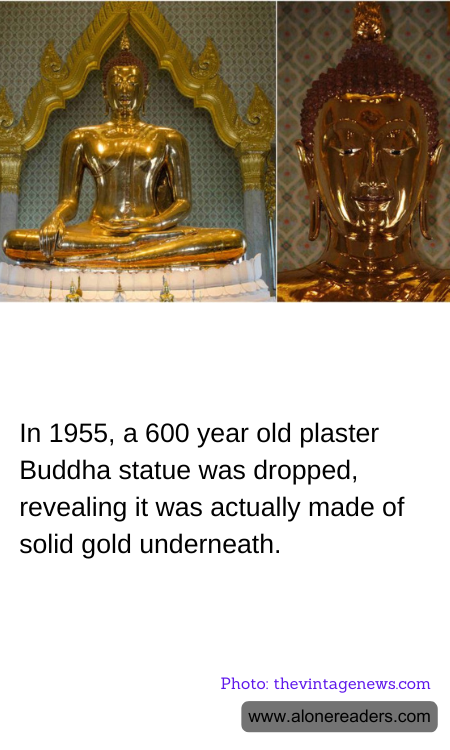
In a surprising twist of historical and cultural significance, a seemingly modest plaster statue of Buddha, dating back 600 years, was revealed to be made of solid gold. The discovery was made in 1955, when the statue was accidentally dropped while being moved at a temple in Bangkok, Thailand. This unexpected incident led to cracks in the plaster, which upon closer inspection, unveiled a golden surface beneath.
The statue, known as the Golden Buddha or Phra Phuttha Maha Suwan Patimakon, is believed to date from the 13th to 14th centuries during the Sukhothai period, a time noted for its artistic and cultural flourishing in Thailand. Historians speculate that the statue was likely covered in plaster in an effort to protect it from theft or looting during periods of war or political turmoil. This disguise was so effective that its true nature remained hidden for centuries, even from those who prayed before it daily.
Measuring about three meters in height and weighing approximately 5.5 tons, the Golden Buddha is one of the largest solid gold statues in the world. Its creation in pure gold suggests that it was an object of tremendous religious importance and likely involved considerable resources and craftsmanship. After the discovery, the statue was moved to Wat Traimit in Bangkok, where it currently resides, housed in a specially constructed building that allows visitors to appreciate its magnificent detail and historical significance.
The story of the Golden Buddha not only highlights the lengths to which ancient peoples went to protect their sacred artifacts but also serves as a fascinating glimpse into the art and culture of historical Thailand. For visitors and Buddhists alike, the statue remains a symbol of faith, resilience, and the enduring values of a civilization that continues to captivate and inspire.