More About This Card
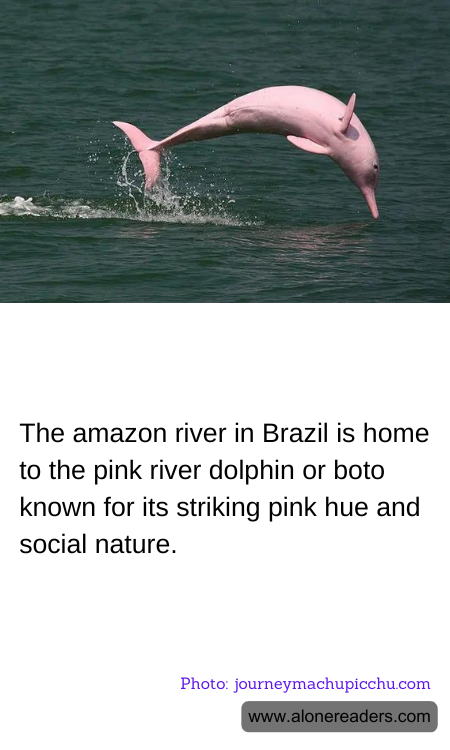
The Amazon River, flowing majestically through Brazil, hosts an extraordinary diversity of life, but one of its most enchanting inhabitants is the pink river dolphin, also known as the "boto." Known for its vibrant pink color, which can range from a soft blush to a striking bright pink, this dolphin species stands out not just for its appearance but also for its unique behaviors and social dynamics.
Pink river dolphins are one of the few species of dolphins that inhabit freshwater environments. They are perfectly adapted to the murky waters of the Amazon River Basin, navigating with ease despite the often obscured visibility. This adaptation is facilitated by their unfused neck vertebrae, allowing them to move their heads up to 180 degrees to maneuver around obstacles such as tree trunks and dense aquatic vegetation.
These dolphins are incredibly intelligent and curious animals, often approaching boats and interacting with humans. Their diet is varied and includes fish, crabs, and even small turtles. Using echolocation to find their prey, pink river dolphins emit sound waves that bounce off objects and return, helping them to "see" their surroundings with great precision.
Socially, pink river dolphins are quite intriguing. They are generally seen alone or in small groups, but they can be quite playful and interactive, both with each other and with other species. During the flood season, when the Amazon River swells, the dolphins roam freely across flooded forests, using the opportunity to explore areas they cannot usually access.
Despite their fascinating nature and the joy they bring to those who observe them, pink river dolphins face several threats. Water pollution, habitat destruction due to deforestation, and accidental catches in fishing gear are significant challenges. Moreover, in some local cultures, they are surrounded by myths and superstitions which can lead to direct harm.
Efforts to protect the pink river dolphin involve legal protection and research aimed at understanding their complex ecology. Education and awareness campaigns are also critical in changing local perceptions and promoting conservation. The survival of the pink river dolphin is not just important for biodiversity but is also indicative of the health of the Amazon ecosystem. As ambassadors of their habitat, they remind us of the interconnectedness of our world and the need for concerted conservation efforts.