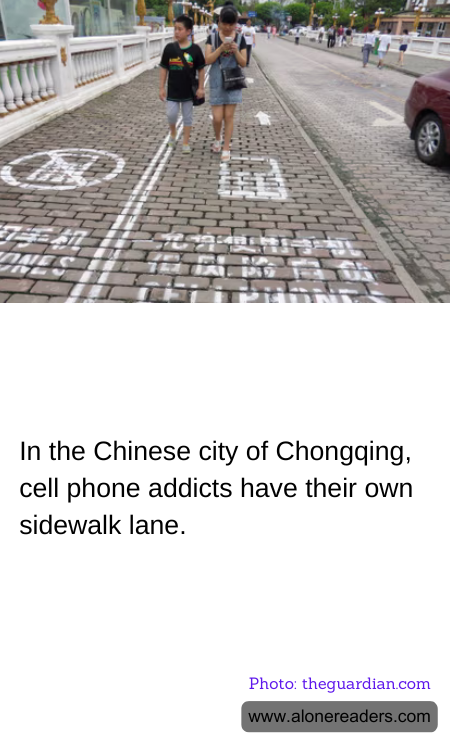
In the bustling city of Chongqing, a unique approach has been taken to address the ever-growing issue of cell phone addiction. The city has introduced a special sidewalk lane designated exclusively for pedestrians who are using their cell phones. This innovative solution aims to improve safety and reduce the disruptions caused by those engrossed in their screens while walking.
The idea stemmed from concerns over pedestrians who walk without paying attention to their surroundings because they are too busy staring at their phones. This behavior can lead to accidents and injuries, not just for the phone users but for everyone around them. By creating a specific lane for these individuals, Chongqing hopes to minimize the risks associated with distracted walking, allowing cell phone users to continue their activities without hindering the flow of foot traffic.
This cell phone lane is clearly marked and is located in a busy tourist area, serving both a functional purpose and as a subtle reminder of the pervasive impact of technology on our daily lives. The lane is delineated with white markings and signs that depict a mobile phone, making it easy for pedestrians to know where they should be if they choose to use their devices while walking.
This initiative reflects a broader cultural acknowledgment and adaptation to the deep integration of digital technology in personal life, similar to the cycling lanes seen in many Western cities that accommodate a different sort of commuter. However, not everyone is convinced that this is a beneficial move. Critics argue that it might encourage more public phone usage, potentially increasing the risk of digital addiction.
Despite the mixed reactions, the cell phone lane in Chongqing stands as an interesting experiment in urban planning. It is a physical manifestation of the challenges modern cities face in a digital age and raises important questions about how best to integrate safety, convenience, and technology in shared public spaces. Whether this initiative will spread to other cities or prove to be a temporary measure, it certainly highlights the need for creative solutions in our continuously evolving urban environments.
