More About This Card
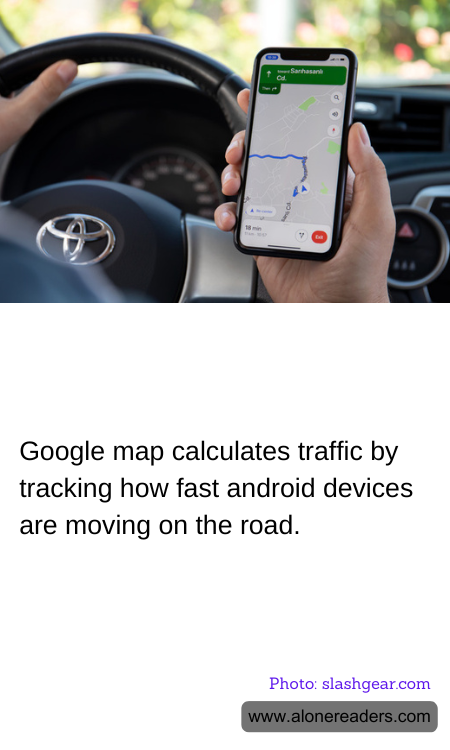
In an age where traffic jams are a common headache, Google Maps has emerged as a vital tool for millions of drivers, providing real-time traffic updates that make commuting a little less strenuous. But how exactly does this technology manage to keep its finger on the pulse of current traffic conditions? The key lies in the use of data collected from Android devices.
When a user navigates with Google Maps, the app uses the smartphone's location data to track the speed at which the device is moving. This information is collected anonymously from millions of Android users who have Google Maps open, creating a vast pool of data that reflects how fast traffic is moving in real time on roads around the world.
To ensure accuracy and protect privacy, Google aggregates this data and combines it with historical traffic patterns to predict traffic conditions. This method allows Google Maps to detect a wide array of traffic conditions, from smooth traffic flows to severe congestion. By analyzing how quickly devices are moving in a particular area, Google Maps can infer the level of traffic and update its traffic conditions accordingly.
Furthermore, if there's a sudden halt in traffic, Google Maps can quickly update its system to reflect this change, allowing other users to see the traffic situation in real time. This, in turn, lets them choose to either stay on their current route or take an alternative path suggested by Google Maps. The algorithm also factors in various events that could impact traffic, such as accidents, roadworks, or even weather conditions, adjusting the traffic predictions and routing advice it provides.
In essence, by leveraging data from Android devices, Google Maps uses a blend of crowd-sourced real-time data, historical data analysis, and predictive technology to give users an accurate picture of current road conditions. This powerful combination helps users avoid traffic snags and better plan their routes, easing the stress of travel and helping to manage the unpredictability of road conditions more effectively. Thus, the seemingly simple act of sharing location data with Google Maps while navigating contributes to a larger collective benefit, easing the commute for everyone on the road.