More About This Card
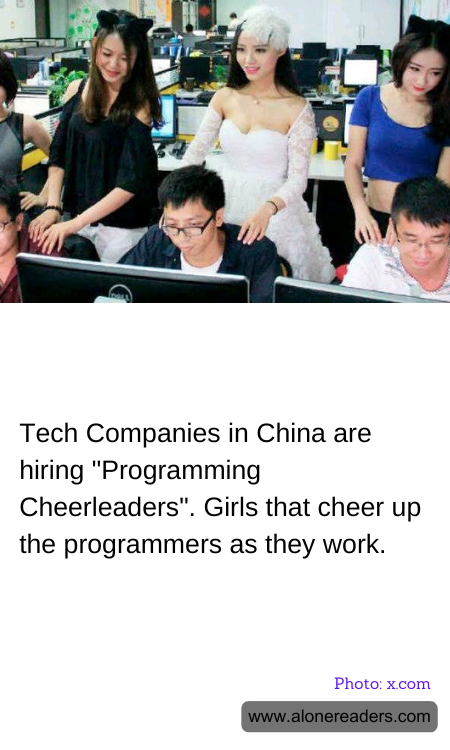
In recent years, tech companies in China have adopted an unusual strategy to boost workplace morale and productivity among their coding staff: hiring "programming cheerleaders." These individuals, predominantly young women, are employed to cheer up and motivate programmers during their often long and arduous hours writing code. The practice has sparked widespread debate about workplace culture and gender roles within the tech industry.
The role of these cheerleaders goes beyond simple encouragement. They are tasked with creating a fun and supportive environment, which includes chatting with programmers, coordinating social activities, and sometimes even physical activities like stretching and massage to help reduce the stress and strain that can come with prolonged periods of sitting and intense concentration. The underlying idea is that happy programmers are more productive, and in a high-pressure tech environment, any boost in productivity can be crucial to a company's success.
However, the concept has not been without controversy. Critics argue that hiring cheerleaders is a misguided attempt at motivation that reinforces gender stereotypes and undermines professional workplace dynamics. They contend that it trivializes the capabilities of both the cheerleaders, who are often hired based on their appearance rather than any skills related to boosting workplace productivity, and the programmers themselves, by suggesting they need such distractions to accomplish their tasks.
Proponents of the practice insist that these employees help create a more lively and enjoyable work environment, thus enhancing creativity and teamwork. They claim that the presence of cheerleaders helps to break the monotony of the day-to-day grind and boosts morale for teams who often work long hours and face high stress.
Regardless of the perspective, the practice highlights broader issues within tech culture around the globe, such as the struggle to find effective and appropriate ways to manage employee engagement and the importance of fostering inclusive environments that promote respect and equality. In addition, it raises questions about the measures companies are willing to take to increase productivity and whether the long-term implications of such practices align with the values we aspire to uphold in modern workplaces. As the tech industry continues to evolve, it will undoubtedly need to address these complex issues amid rising scrutiny and evolving societal expectations.