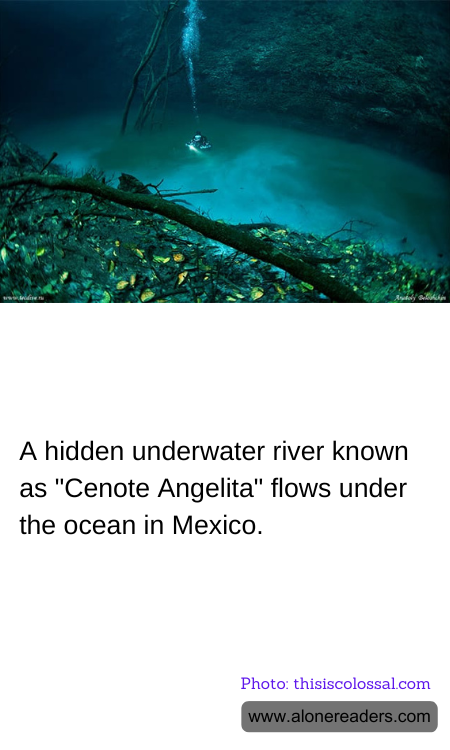
In the depths of Mexico’s Yucatan Peninsula, nature’s mysteries unveil themselves in extraordinary forms, one of which is the spectacular Cenote Angelita, or "Little Angel". This underground water formation is not just a cavern or pool, but a stunning geological phenomenon—a river hidden beneath the ocean. What makes Cenote Angelita particularly captivating is its "underwater river."
This surreal and ethereal scene technically isn't a river as we would usually understand it but rather an example of a halocline. A halocline occurs where freshwater and saltwater meet and do not mix due to their different densities. At Cenote Angelita, the clear freshwater rests atop a denser layer of saline water saturated with hydrogen sulfate. Below 30 meters, the water becomes murky, creating the illusion of an underwater river flowing beneath the surface.
Cenote Angelita is enclosed by steep walls that descend deeply, resembling an eerie island surrounded by a mysterious river. Above the halocline, divers swim through crystal-clear freshwater seeing the open sky above them. As they descend deeper, they encounter the dense, cloud-like layer of hydrogen sulfate. This forms a distinct separation that visibly looks like a flowing river, complete with trees and leaves that have fallen and settled in this ghostly underwater landscape.
Adventurous divers who plunge into the cenote can experience swimming between two different environments. Above the halocline, the water is fresh and filled with light, while descending into the halocline, they enter a darker, denser world, giving an entirely otherworldly experience. Visually, it feels like penetrating into a misty stream hidden in the depths of the earth.
Cenote Angelita not only offers a unique diving experience but also provides a stark reminder of the complex and extraordinary natural processes that occur without human observation. Moreover, it highlights the unique geographical traits of the Yucatan Peninsula, known for its rich network of cenotes that have been used by ancient civilizations and continue to draw explorers from around the world. Each cenote, including Angelita, forms a vital part of the ecosystem and serves as a historical archive that provides clues to the geological and cultural past of the region.
