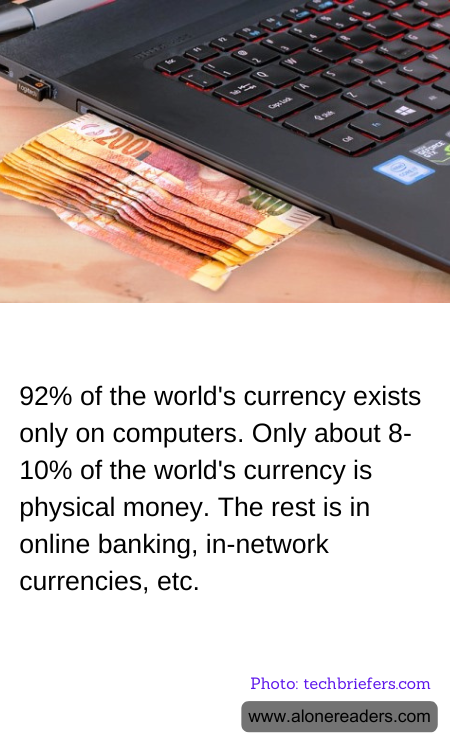
In today's digital age, the concept of money has transformed dramatically, moving away from physical bills and coins to become predominantly virtual. Astonishingly, 92% of the world's currency now exists only in digital form. This shift towards digital currencies encompasses various forms of electronic money, from online banking and mobile transactions to cryptocurrencies and other network-based currencies.
The transition from tangible to digital money has been driven by numerous factors, including convenience, efficiency, and the broadening reach of the internet. Digital transactions allow for instant and seamless exchange across great distances, enabling global trade and personal transactions to occur at an unprecedented speed. Moreover, digital currencies can be seen as more secure than physical money which is susceptible to theft and loss.
However, the digital nature of 92% of the world's money supply also brings with it challenges and risks. Issues such as cyber security breaches, digital fraud, and the volatility of certain digital currencies pose significant concerns. Additionally, the digital divide means that not everyone has equal access to digital banking facilities, leading to financial exclusion for those without digital literacy or access to technology.
Moreover, the vast majority of money being digital raises questions about control and surveillance. Digital transactions can be easily tracked, leading to privacy concerns. It also places a significant amount of power in the hands of financial institutions and tech companies that manage digital currencies and transactions.
As digital currency continues to evolve, it is likely that new solutions and regulations will emerge to address these challenges. For now, the reality that only about 8-10% of all currency is in physical form represents a significant shift in our understanding and handling of money, pointing towards a future where digital transactions may completely dominate financial exchanges. The implications of this shift are profound, touching on economic, social, and political realms as we navigate this uncharted territory.
