More About This Card
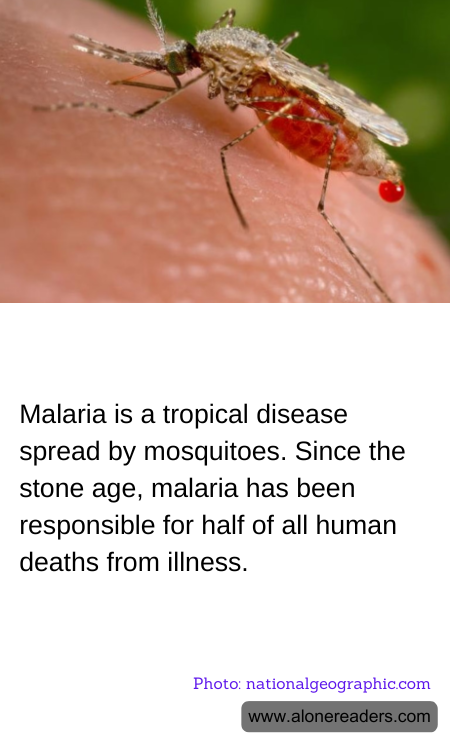
Malaria, a tropical disease transmitted through the bites of Anopheles mosquitoes, has a long and grim history as one of the deadliest human ailments. The disease is typically more prevalent in regions near the equator, particularly in sub-Saharan Africa, Southeast Asia, and Latin America, chiefly due to the warm and moist climate that is conducive to the breeding of mosquitoes.
The causative agent of malaria is a parasite known as Plasmodium. There are multiple species of this parasite, but Plasmodium falciparum is the deadliest, responsible for the majority of mortality and morbidity associated with the disease. When an infected mosquito bites a human, it transfers the parasites, which then multiply in the liver before invading red blood cells. The symptoms can range from mild to severe and include high fevers, chills, sweating, headaches, nausea, and vomiting. If not treated promptly and effectively, malaria can lead to severe complications like anemia, hypoglycemia, and cerebral malaria, which can be fatal.
Over the centuries, malaria has had a catastrophic impact on populations, particularly in the pre-modern era. Historical evidence suggests that malaria has been influencing human communities since ancient times, and some researchers argue that the disease has been responsible for half of all human deaths from illness since the Stone Age. The disease was a significant barrier to the economic and social development of afflicted regions, draining resources, and reducing life expectancy.
The fight against malaria has involved various strategies, from environmental management, such as draining swamps and reducing standing water, to the use of insecticides and mosquito netting. Medical advances have also played a crucial role, with the development of antimalarial drugs and vaccines. Quinine, extracted from the bark of the cinchona tree, was one of the first treatments used against malaria, famously administered during the building of the Panama Canal to help protect workers from the disease.
Today, efforts to control and eradicate malaria involve a combination of preventive measures, drug treatments, and educational campaigns to raise awareness about the risks and prevention strategies. International organizations like the World Health Organization (WHO) are actively involved in supporting malaria-stricken countries by providing resources, supporting research into new treatments and vaccines, and setting policy guidance.
While significant progress has been made in reducing the global malaria burden, the disease still poses a major challenge, particularly in poorer regions of the world. With the threat of climate change and global warming potentially expanding the habitats suitable for the vectors, ongoing vigilance and innovation in public health strategies remain crucial in the fight against malaria.