More About This Card
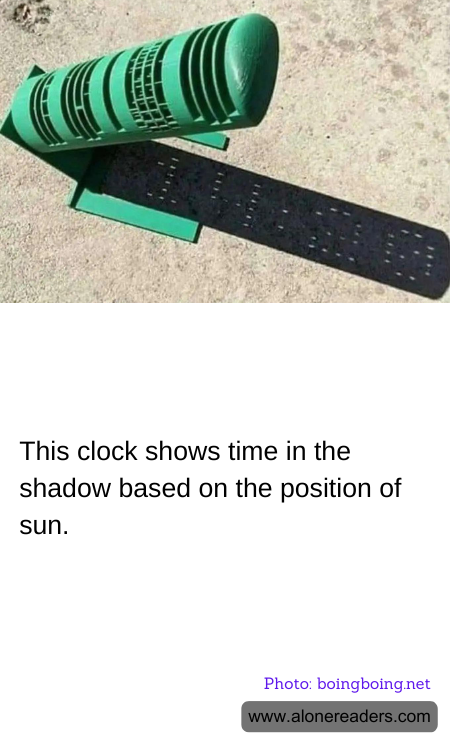
In an age where digital technology dominates our timekeeping, there exists a remarkable clock that relies solely on the fundamental principles of nature to display the time: a sundial clock that uses shadows cast by the sun. This traditional yet innovative approach combines ancient techniques with modern design, providing not only functional time-telling but also an aesthetic outdoor feature.
The principle behind this clock is straightforward but ingenious. It consists of a gnomon, typically a rod or a triangular blade, which stands perpendicular to the dial plate. As the sun moves across the sky, the gnomon casts a shadow on the dial, which is marked with hour lines. These lines are arranged according to the geographic location of the clock to accurately reflect the passage of time as dictated by the sun's position.
However, reading time from a shadow requires an understanding of the sun's movement and the variations brought by different seasons. During summer, when the sun rises higher in the sky, the shadows are shorter and shift differently compared to winter when shadows are longer and cast at a sharper angle. This variation is due to the Earth's tilted axis relative to its orbit around the sun. The clock's design typically accounts for these changes, although it is most accurate around the vernal and autumnal equinoxes when the sun crosses the plane of the Earth's equator.
Moreover, these sundial clocks are often personalized and crafted with artistic designs, making them more than just functional items; they are sculptures that enhance the beauty of a garden or public space. They serve not only as educational tools that demonstrate the movement of the Earth and our ancient methods of keeping time but also as a symbol of the blending of science and art.
Despite their reliance on sunny weather and their need for correct geographical positioning to function accurately, sundial clocks attract enthusiasts and scholars alike for their blend of simplicity and precision. They remind us of a time when the rhythm of life was governed more by the natural light of day than by the artificial clicks of a digitized world, rekindling an appreciation for the natural cycles that still underpin our lives today.