More About This Card
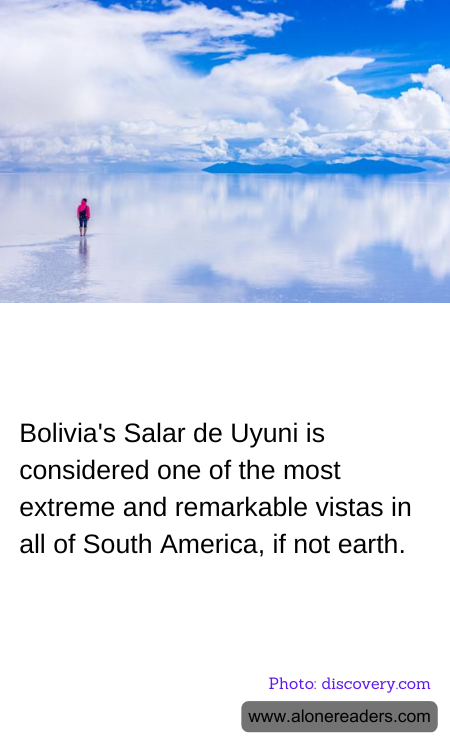
Bolivia's Salar de Uyuni offers a landscape that is as surreal as it is spectacular. Stretching over 10,000 square kilometers, it is the world's largest salt flat and is nestled high in the Andes, sitting at an altitude of approximately 3,656 meters above sea level. Originally part of a prehistoric salt lake that went dry, leaving behind a desert-like, nearly unending blanket of bright-white salt, rock formations, and cacti-studded islands, its ethereal beauty is not its only claim to fame; the ultra-flat surface underfoot creates a mirror effect after just a thin layer of water gathers, which is a common sight during the rainy season from November to March.
This stunning natural phenomenon attracts not only tourists who seek to capture its unparalleled vistas but also photographers and adventurers from around the world aiming to experience its unique landscape. The mirror effect on the salt flats creates an illusion of sky and earth merging into one, offering a setting for breathtaking photographs and indelible memories.
Additionally, Salar de Uyuni plays a crucial role in the local and global economy due to its rich lithium reserves, accounting for anywhere between 50 to 70 percent of the world's known lithium reserves. This mineral is vital in the production of batteries, making Salar de Uyuni an important site not just for tourism but also for energy resources.
The area is also culturally significant to the local communities, including the Aymara and Quechua people, who have lived in this harsh climate for thousands of years, relying on the extraction of salt and quinoa cultivation as means of livelihood. The annual festival held here, where locals harvest the salt, is a major event attracting participants in colorful costumes, celebrating their indigenous heritage and connection to the land.
For intrepid travelers, a trip to Salar de Uyuni offers more than just otherworldly scenes. It provides a glimpse into the resilience of nature and human civilization alike. Whether it’s the geometric salt patterns, the bizarre rock formations on Incahuasi Island (a hilly outpost covered in giant cactuses), or the antique train cemetery where old steam locomotives rust peacefully, each adds a layer to the profound narrative of Salar de Uyuni.