More About This Card
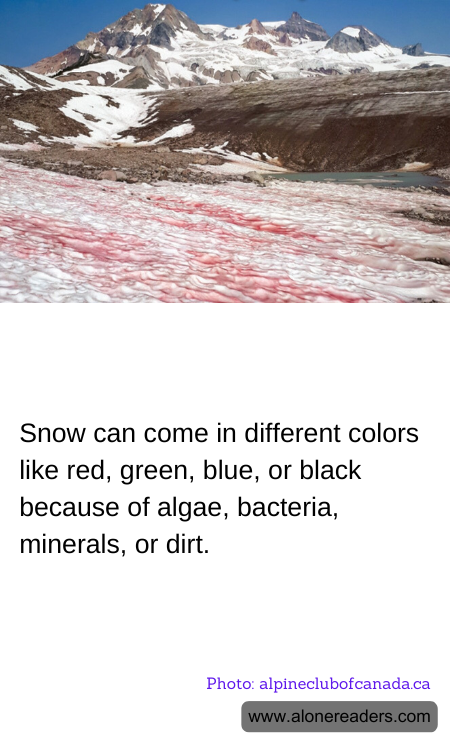
Snow is typically pictured as a pristine white blanket covering the landscape, but it can actually appear in a variety of colors including red, green, blue, and black. These unusual hues are not due to snow itself having color, but are a result of various environmental factors including algae, bacteria, minerals, and dirt which the snow absorbs or with which it comes into contact.
One of the most striking phenomena is "watermelon snow," which appears pink or red. This odd coloration is caused by a type of cold-loving algae called Chlamydomonas nivalis, which thrives in freezing temperatures and water-rich environments. When the sun's rays intensify, these algae bloom just beneath the surface of the snow, absorbing sunlight which increases their red pigment as a form of natural sunscreen, thus giving the snow a reddish hue.
Green snow, often found in coastal polar regions like Antarctica, is caused mainly by blooms of another type of algae. Scientists have observed that with rising temperatures due to climate change, these green algae blooms are becoming more widespread. They play a crucial role in carbon absorption, potentially impacting the global carbon cycle significantly.
Blue snow can often be seen in deep, dense accumulations of ice. This phenomenon occurs because layers of snow can create an optical filter that absorbs other colors more efficiently than blue. Thus, when light penetrates these thick, pure layers of snow, blue is the most common wavelength of light that is scattered, giving the snow a strikingly blue tint.
Black snow can be the result of various pollution sources, such as soot or ash from fires, or it can occur naturally from volcanic minerals in areas near active volcanoes. For instance, when cities with heavy industries experience snowfall, pollutants from factories may mix with the snow, leading to a darker coloration. This can pose ecological problems, as black snow absorbs more heat from the sun than white snow, leading to faster melting and potential negative impacts on local ecosystems.
Understanding the causes behind these colorful snow types is important not only for scientific curiosity but also for evaluating environmental health and potential ecological threats. As climate change progresses, monitoring these phenomena can provide clues about changes in environmental conditions and help guide future policies on pollution and climate action.