More About This Card
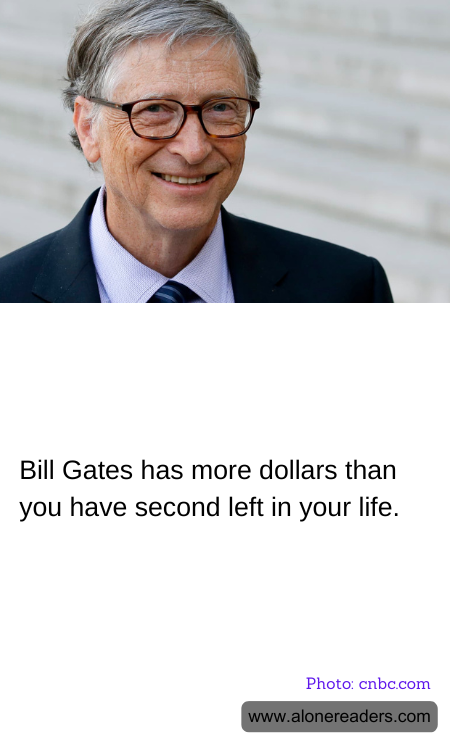
Bill Gates, the co-founder of Microsoft, is one of the richest individuals in the world, with a net worth that consistently hovers around the top of global wealth rankings. It is often said, somewhat astonishingly, that Bill Gates has more dollars than most people have seconds left in their lives. This statement is not just an exaggeration but a reflection of the staggering scale of his wealth compared to the average person's financial holdings.
To put this into perspective, let's break down the numbers: An average human lifespan is roughly 80 years, which amounts to about 2.5 billion seconds. Bill Gates, with a net worth that has reached over $100 billion at times, indeed has more dollars than the total seconds most individuals will experience in their lifetime. This comparison is not just a testament to his immense wealth but also highlights the profound disparity between the world's billionaires and the general population.
The accumulation of such wealth by Gates stems largely from Microsoft, the software giant he founded with Paul Allen in 1975. Microsoft's development of Windows and Office software fundamentally changed how people interact with computers and revolutionized the personal computing industry. Over the decades, the success of these products has not only allowed Gates to accumulate vast wealth but also enabled him to have a significant impact on global tech development and business practices.
However, it is important to note that Bill Gates has pledged to give away a substantial portion of his wealth. Through the Bill & Melinda Gates Foundation, he has directed billions towards various philanthropic activities around the world, focusing on health, education, and poverty reduction. These initiatives are aimed at leveraging wealth to create positive change, addressing systemic global challenges that require substantial funding and long-term commitment.
In reflecting on Gates' wealth in comparison to the average person's lifetime measured in seconds, it's clear that such wealth can have transformative potential, both for individuals and for wider society. While the scale of his wealth might be difficult to comprehend, it also serves as a reminder of the possibilities that can arise when significant resources are directed towards tackling some of the world's most pressing issues.