More About This Card
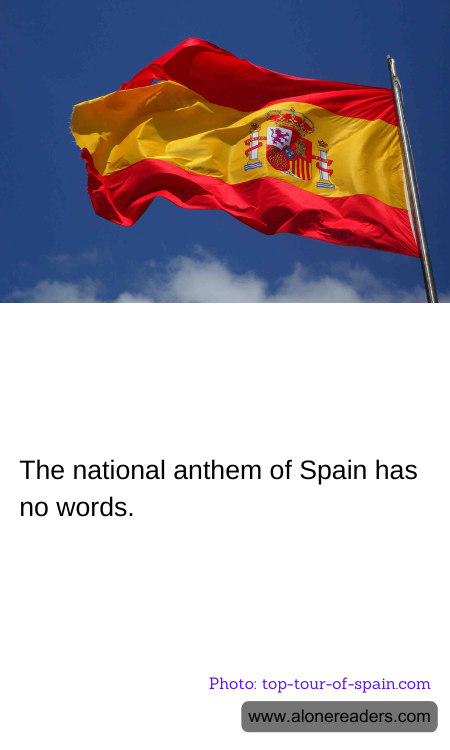
Spain’s national anthem, known as the "Marcha Real" (Royal March), is one of the few national anthems in the world that does not have official lyrics. It is unique in its lack of words and stands out due to its history and the cultural values it reflects. The "Marcha Real" was first adopted in 1770 under the reign of King Charles III and has undergone various adaptations and changes over the centuries, yet the melody has persisted.
The absence of lyrics in the "Marcha Real" is considered by some to be an advantage as it avoids the potential for division among Spain's diverse regional identities. Spain is a country with several languages like Catalan, Galician, and Basque, each of which is prominent in different autonomous communities. The lack of lyrics means that the anthem can unify these distinct regions without favoring one linguistic or cultural group over another. It becomes a purely musical representation of the nation, promoting unity and collective identity.
Over the years, there have been numerous initiatives and proposals to give the "Marcha Real" official lyrics, but none have gained the necessary consensus or acceptance. In 2007, the Spanish Olympic Committee held a contest to provide lyrics in hopes of promoting national pride during international sports events. However, the lyrics proposed were met with widespread criticism and the initiative was quickly abandoned.
Despite not having words, the "Marcha Real" is highly respected and symbolically powerful. The instrumental nature of the anthem allows for a focus on the music’s solemnity and the sense of tradition it conveys. It plays an essential role during official events, sports competitions, and national celebrations where it fosters a sense of patriotism and collective belonging among Spaniards.
The wordless status of the "Marcha Real" may be seen as lacking by some; however, it undeniably constitutes a significant part of Spain's heritage. As nations evolve, so do symbols like national anthems, but the enduring instrumental melody of the "Marcha Real" continues to serve as a unifying force, echoing the historic and cultural complexities of Spain.