More About This Card
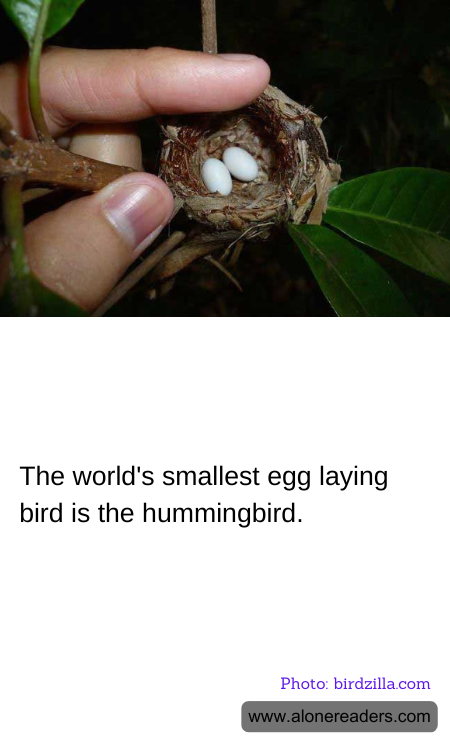
Hummingbirds, renowned for their diminutive size and remarkable aerial abilities, also hold the title for laying the smallest eggs among birds. These tiny avian wonders are found primarily in the Americas, with species ranging from Alaska to Tierra del Fuego at the southern tip of South America. Their eggs are astonishingly small, roughly the size of a jellybean or a pea, measuring less than half an inch in length.
The female hummingbird is solely responsible for the nurturing and upbringing of the young. She meticulously constructs a compact, cup-shaped nest using materials such as moss, lichen, and spider silk, which adds an elastic quality to accommodate the growing chicks. Nest placement is strategic, often located in sheltered tree branches or under leaves to camouflage from predators.
The egg-laying process of hummingbirds is as fascinating as their rapid wingbeats. Typically, a hummingbird lays two eggs per breeding cycle, though occasionally only one may be laid. Each egg, despite its small size, represents a significant investment for the mother in terms of energy and resources. The incubation period ranges from 14 to 23 days depending on species and environmental conditions.
Once hatched, the chicks are altricial, meaning they are born blind, featherless, and completely dependent on their mother for food and protection. The mother hummingbird feeds them a diet of nectar and insects, which she regurgitates. This high-protein diet is essential for their rapid growth. In just three to four weeks, the chicks are typically ready to leave the nest, a quick turnover that highlights the rapid pace at which hummingbird life cycles progress.
Despite being so minute, hummingbird eggs encapsulate the remarkable endurance and survival capabilities of these birds. Their ability to lay and successfully hatch such small eggs is just another feature that makes hummingbirds a fascinating subject for bird watchers and nature enthusiasts alike. Their life cycle, from egg to adult, is a compelling narrative of adaptation and survival in the wild, showcasing the resilience and beauty of nature in even its smallest manifestations.