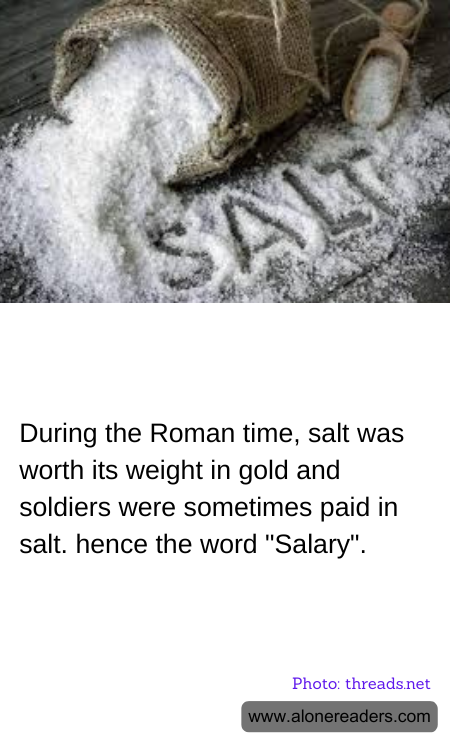
More About This Card
The historical connection between salt and money is exemplified during the Roman era, when salt was not just a seasoning but a highly valued commodity. Known for its vital role in food preservation and seasoning, salt's utility made it as precious as gold in ancient civilizations. This value is strikingly illustrated by the fact that Roman soldiers were sometimes paid with salt instead of gold or silver. This method of payment was practical, given the essential nature of salt in everyday life, its relatively stable form, and its widespread availability.
The term "salary" itself derives from this ancient practice. It comes from the Latin word "salarium," which is connected to "sal," the Latin word for salt. Originally, salarium referred to the money allotted to Roman soldiers for the purchase of salt, an essential commodity in a time before refrigeration and modern preservation techniques. Over time, the concept of salarium evolved to mean the whole of the wages soldiers were paid, linking the idea of salary to compensation for work.
This historical tie of salt to monetary compensation highlights its immense value in ancient economies. Beyond a simple seasoning, salt was a lifeline, preserving food to last through scarce times and enhancing flavor, thereby improving the quality of the diet. The payment of soldiers in salt is a testament to its worth and utility.
The importance of salt extends beyond Rome; many other ancient cultures, including the Chinese, the Egyptians, and various European societies, placed high value on salt. In some cultures, it even served as a trading currency, cementing its role as a cornerstone of ancient economy and trade. This historical perspective not only enriches our understanding of the word "salary" but also highlights the broader economic and cultural significance of commodities like salt in shaping human history.