More About This Card
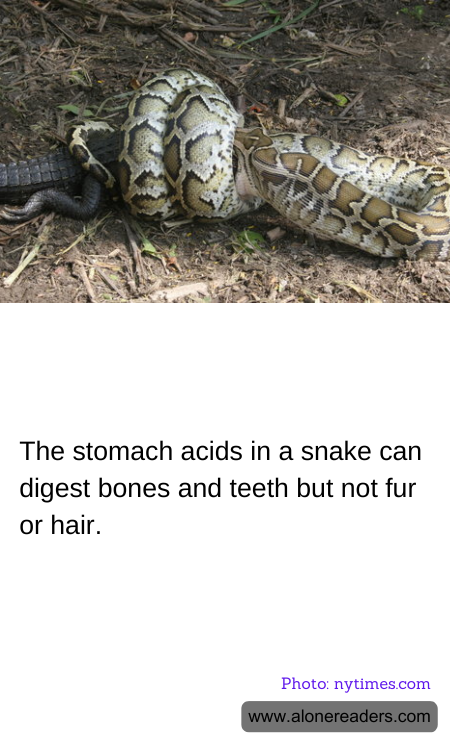
Snakes are fascinating creatures, known for their ability to consume prey much larger than their heads thanks to their extremely flexible jaws. However, what happens after a snake swallows its meal is equally intriguing. The digestive system of a snake is uniquely adapted to break down complex materials, including bones and teeth, but it struggles with fur or hair.
The digestive process in snakes begins with the secretion of extremely potent acids and enzymes from the stomach. These substances are so powerful that they can dissolve bones and teeth, which are composed of calcium and other minerals. This capability allows snakes to extract maximum nutritional value from their meals, as they can digest and utilize almost all parts of their prey.
The acids in a snake's stomach are highly concentrated hydrochloric acid, which has a very low pH, making it capable of breaking down tough materials. Enzymes such as pepsin further aid in the breakdown of proteins, ensuring that all the nutritious parts of their prey are metabolized efficiently. This process can take several days, depending on the size of the prey and the type of snake. Larger meals may require more time to fully digest.
While bones and teeth can be dissolved by these stomach acids, fur and hair present a different challenge. These materials are composed primarily of keratin, a durable protein that is resistant to the acidic conditions of the snake’s stomach. Keratin's structure makes it extremely difficult to break down, so instead of being digested, fur and hair often form a mass inside the snake’s digestive tract. Eventually, this indigestible material is regurgitated by the snake as a compressed pellet, allowing the digestive process to continue smoothly with the more digestible materials.
This selective digestion is crucial for snakes, as it prevents their digestive system from being clogged with indigestible material, which could potentially be fatal. The ability to eject these hair and fur pellets ensures that their digestive tract is ready for the next meal, maintaining their efficiency as predators. This fascinating adaptation highlights the balance of extreme capability and limitation within the natural world, showcasing how even the most robust systems have their specific constraints.