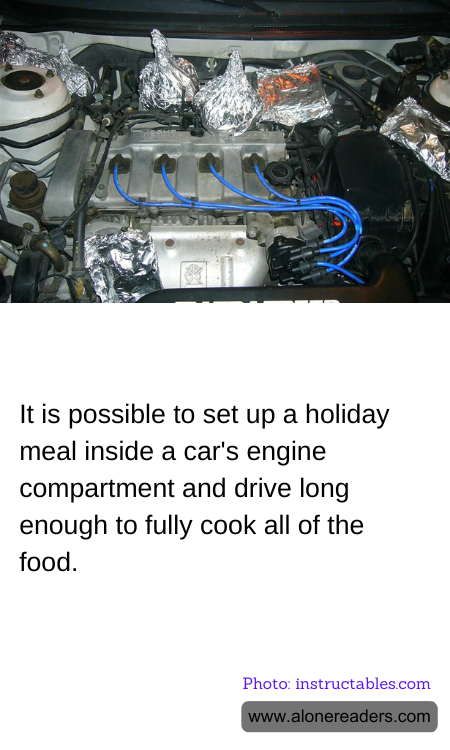
Cooking a meal using a car's engine compartment, while unconventional, is indeed possible and can add an adventurous twist to road trips. This method, often referred to as "carbecue," involves using the engine's heat to cook food while you drive. Enthusiasts of this cooking technique argue that it not only makes the journey more interesting but can also save time, allowing travelers to enjoy a hot meal as soon as they stop without the need for traditional cooking methods.
To successfully cook a meal in a car's engine compartment, one needs to understand the basic layout and operating temperature of their vehicle’s engine. Typically, the engine needs to reach a temperature that is sufficient to cook food, which most car engines can achieve while driving. The key is to safely secure the food in a heat-safe container and find the hotter parts of the engine, usually around the exhaust manifold or near the turbocharger if the car is so equipped.
Aluminum foil is commonly used to wrap foods tightly before placing them in the engine compartment. This not only helps in cooking the food evenly but also prevents any leakage of juices that could potentially damage engine components. It’s important to strategically place the food packets in spots that are not only hot but are also safe and won’t interfere with the moving parts of the engine.
The duration of the drive needed to cook the meal varies according to the type of food and the heat generated by the engine. For instance, thinner cuts of meat or vegetables might take anywhere from 100 to 200 miles of driving to cook through, whereas denser items like thick beef patties or large potatoes might require longer, depending on the heat distribution and length of the journey.
Despite the novelty and the practical benefits on long journeys, cooking in a car's engine does come with risks. There is the potential for food contamination from engine fumes or leaked fluids, and there is also a risk of fire if the food is not secured properly. Furthermore, it's crucial to check that the packaging of the food does not obstruct any functional parts of the engine or melt due to excessive heat.
In sum, while cooking a meal using a car's engine is feasible and can be a fun experiment during long drives, it requires careful preparation and constant monitoring to ensure safety. It's a unique way to combine the necessity of eating with the joy of traveling, turning a simple road trip into a memorable culinary adventure. Before attempting this, one should fully understand their vehicle's engine characteristics and consider the safety protocols to ensure a delicious and safe dining experience on the go.
