More About This Card
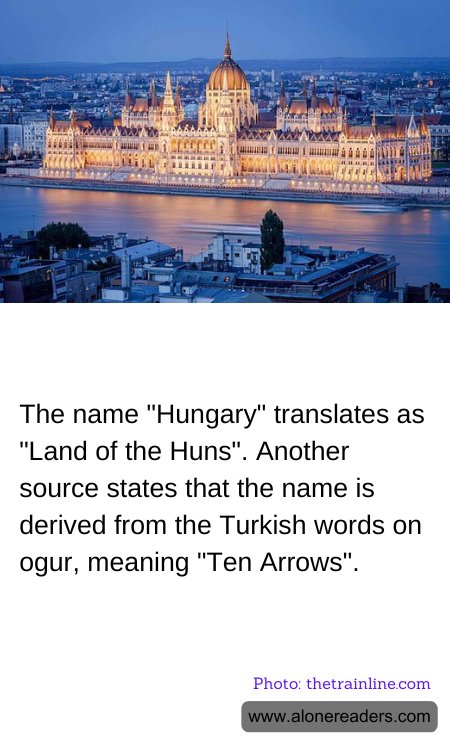
The origins of the name "Hungary" are steeped in historical ambiguities and competing theories. One popular explanation traces the name back to the Huns, an ancient nomadic tribe that roamed the steppes of Central Asia and Europe. According to this view, Hungary means the "Land of the Huns," highlighting the supposed descendants of these early warriors in the region. This interpretation holds emotional and cultural significance, reflecting the early medieval history when formidable Hunnic leaders like Attila left an indelible mark on the European landscape.
Another intriguing theory suggests that the name Hungary derives from the Turkish words "on ogur," which translates to "Ten Arrows." This theory is linked to the tribal federation of the Onogurs, part of the larger group of Turkic peoples. The term "Ten Arrows" symbolizes the unity of ten tribes, emphasizing a historical alliance or confederation among these groups around the 8th century. This explanation not only points to the diverse ethnic and cultural foundations of the Hungarian nation but also highlights the complex interplay of Turkic and European influences that shaped the early history of the region.
Despite these differing viewpoints, both theories underscore the rich tapestry of Hungary's past. The idea of Hungary as a melting pot of various tribes, cultures, and influences is central, whether one views it through the lens of Hunnic legacy or a Turkic confederation. The question of which theory more accurately reflects historical truth remains a subject of debate among historians, adding an intriguing layer of mystery to the nation's origins. Regardless, the name "Hungary" itself is a testament to the country’s deep historical roots and the diverse influences that have shaped its unique cultural identity over the centuries.