More About This Card
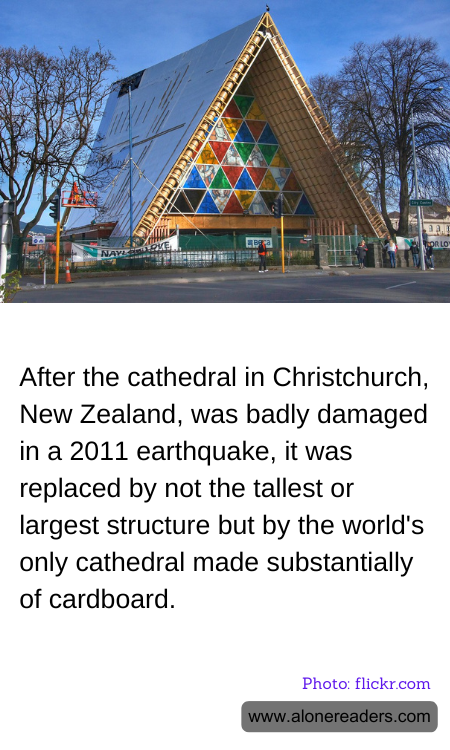
In 2011, Christchurch, New Zealand, experienced a devastating earthquake that left much of the city in ruins, including the historic Anglican cathedral. In the wake of this disaster, the city had to think innovatively about how to rebuild its iconic structures, leading to the creation of the world’s only cathedral made substantially of cardboard. Known as the Transitional Cathedral, but popularly referred to as the Cardboard Cathedral, it was designed by Japanese architect Shigeru Ban, who is renowned for his work with novel materials and temporary structures in disaster-stricken areas.
The Cardboard Cathedral was constructed primarily using cardboard tubes, timber, and steel. Despite some skepticism regarding the robustness of the materials, the cardboard tubes proved to be both structurally sound and sustainable. Shigeru Ban’s design not only provided a quick and economical solution for a temporary cathedral but also introduced a visually stunning and environmentally friendly architecture. The A-frame structure, consisting largely of 98 equally sized cardboard tubes coated with waterproof polyurethane and flame retardants, showcases a striking design that contrasts dramatically with traditional cathedral architecture.
This unconventional choice of material also represents a symbolic gesture of resilience and renewal. The cathedral's semi-permanent nature reflects the city's ongoing recovery from the earthquake and its hope for the future. It can accommodate up to 700 people and hosts various community events, concerts, and art exhibitions, playing a crucial role in revitalizing community spirit in Christchurch.
Moreover, the Cardboard Cathedral has attracted tourists from all over the world, eager to see how innovation and architecture have melded to create something beautiful out of the catastrophe. It stands not just as a place of worship but as a testament to the creativity and spirit of Christchurch’s people and their ability to rise from adversity. While the debate continues about the future of the traditional cathedral’s ruins, the Cardboard Cathedral remains a beloved and emblematic structure in Christchurch’s urban landscape, symbolizing the city’s strength and progressive approach to challenges.