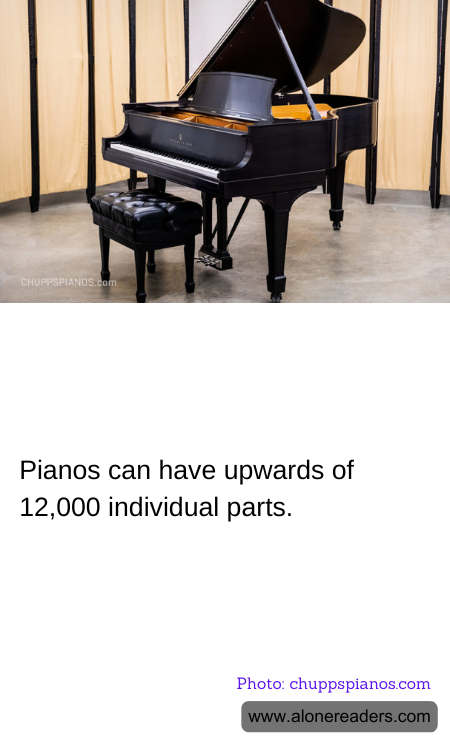
The piano, an instrument celebrated for its ability to produce a wide array of tones and sounds, is a marvel of musical engineering and design. What may surprise many is that a typical piano is comprised of upwards of 12,000 individual parts, each playing a crucial role in its overall functionality and sound production. This intricate ensemble of parts includes everything from tiny felt hammers and steel strings to wooden soundboards and cast iron frames.
This complexity begins with the piano's strings, of which there can be over 200 in a grand piano. Each string must be precisely manufactured to achieve the correct pitch when struck by the piano’s hammers. These hammers themselves are meticulously crafted, often from tightly compressed felt covering a wooden core, designed to strike the strings with just the right amount of force and rebound without damaging them.
The action mechanism of the piano, known as the "action," is another feat of mechanical intricacy. This system of levers and springs must respond instantaneously to the pianist's touch, allowing for expressive playing and the ability to produce sounds ranging from a soft whisper to a thunderous roar. The engineering behind this system ensures that musicians have control over dynamics and articulation, which are essential for emotive performances.
The largest and perhaps the most visually striking part of the piano is the soundboard. Traditionally made from spruce, the soundboard amplifies the vibrations of the strings through its delicately engineered structure, which allows it to resonate freely. Supported by robust ribs and bordered by a strong wooden frame, usually made of beech or maple, it helps project the sound outward and sustain the notes played.
Last but not least, the external cabinet not only provides an aesthetic appeal but also contributes to the overall sound quality and durability of the instrument. The cabinet houses the keyboard, action, and strings, and works with the soundboard to enhance volume and tone. Its design and the materials used can greatly affect the acoustic properties of the piano.
Considering the piano’s numerous components, it is clear why it is often described as an orchestral instrument in itself, capable of producing a vast palette of sounds and textures. This complexity is what makes the piano not only a formidable instrument to master but also a profound source of inspiration and joy for both players and listeners. The immense craftsmanship required to assemble and fine-tune each of the 12,000 parts is a testament to the enduring allure and fascination of the piano throughout centuries.
