More About This Card
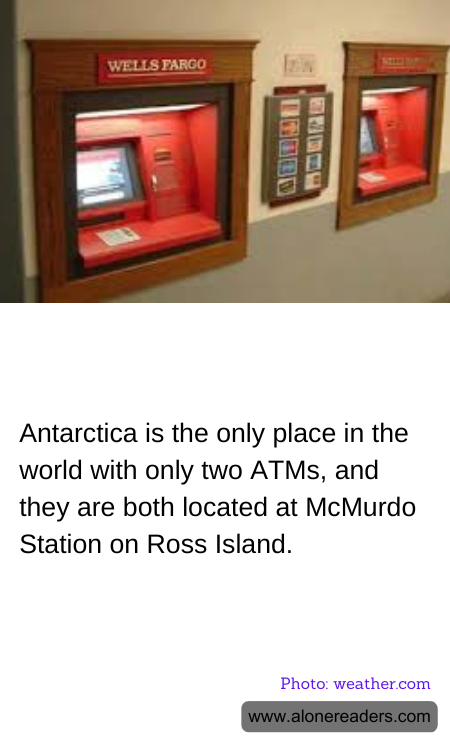
Antarctica, Earth's southernmost continent, is known for its harsh climate, stunning icy landscapes, and unique wildlife. What's less known is the existence of only two ATMs on this largely uninhabited continent, both of which are located at McMurdo Station on Ross Island. This station is one of the critical hubs of human activity in Antarctica, primarily occupied by researchers and support staff who work on a range of scientific projects.
The two ATMs are managed by Wells Fargo, an American multinational financial services company. They were installed at McMurdo Station to serve the financial needs of the people living and working there. The cash machines are crucial during the austral summer, from October to February, when the population at the station can swell up to 1,000 people including scientists, contractors, and support personnel.
Installing and maintaining ATMs in such an extreme environment comes with unique challenges. The cold temperatures and limited maintenance opportunities mean that these machines must be exceptionally reliable. Technicians who visit the station as part of the annual maintenance crew ensure that both ATMs are fully functional and well stocked with US dollars, which is necessary as the station's remote location rules out quick fixes.
The presence of these ATMs highlights the complexities of human life in one of the most extreme and remote places on earth. While they serve a practical financial purpose, these ATMs also stand as a reminder of the extensive logistical planning required to operate in Antarctica. Despite the continent's isolation and the tough living and working conditions, humans have found ways to adapt technologically to suit everyday needs, as demonstrated by the ATMs at McMurdo Station. These machines provide a small but crucial comfort, simplifying a crucial aspect of economic exchanges in this remote outpost. Thus, each withdrawal from these ATMs is a testament to human ingenuity and adaptation in one of the world's most challenging environments.